


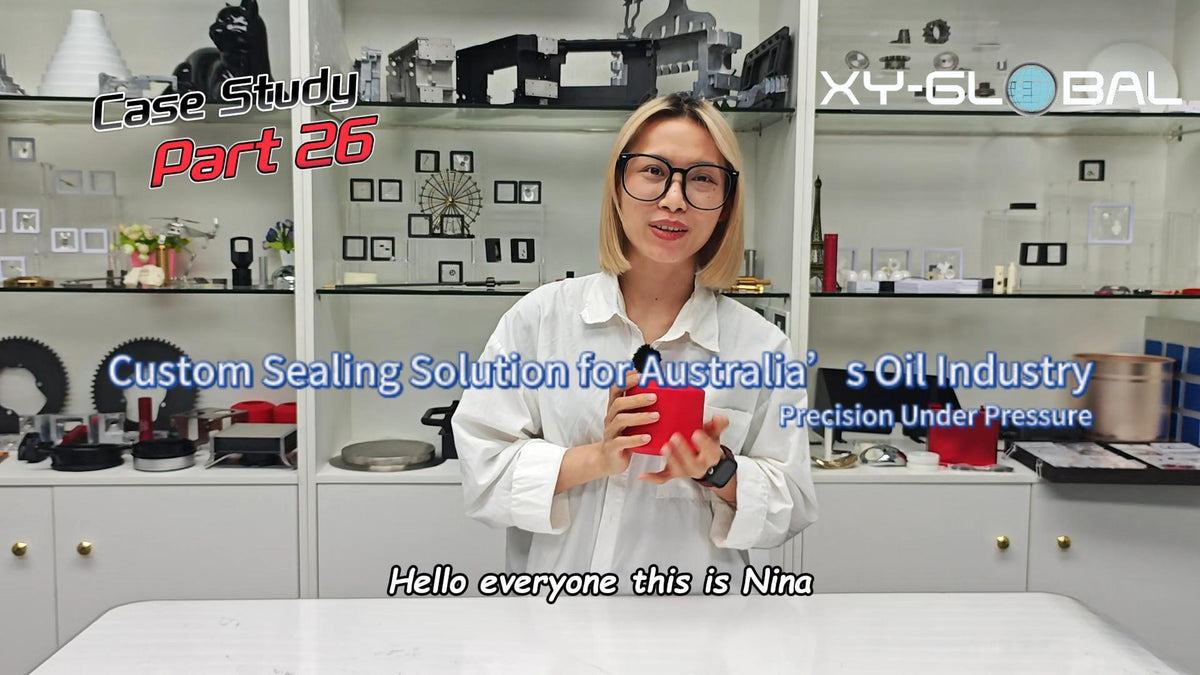
We recently completed a custom sealing part project for a client in Australia’s oil industry. The application environment was demanding, with long-term exposure to high pressure, high temperature, and oil-gas conditions.
Because of this, the part needed to provide reliable sealing performance, along with good wear resistance, heat resistance, dimensional stability, and surface quality.
The Challenge Behind the Project
The part was made from BASF Elastollan elastomer and produced through precision injection molding.
Although the part itself was not large, the requirements were strict. One of the main challenges came from the material’s sensitivity to temperature and pressure during molding.
At the same time, the ring structures at the bottom required consistent dimensional accuracy and a smooth appearance, which left little room for process variation.
To manage this, the production process had to remain stable at every stage. Molding parameters were adjusted carefully, and each batch was checked for dimensions, hardness, and surface condition to make sure the final parts met the project requirements.
From Process Control to Final Result
After testing and verification, the final product passed the required checks and was accepted by the client. The project also created a good foundation for future cooperation, as the client expressed satisfaction with the result and interest in further orders.
For us, this project was a practical example of how stable process control and consistent quality management support demanding custom parts.
Our role was to keep the molding process under control, manage the risks caused by material behavior and part structure, and deliver a sealing part that could perform reliably in a harsh operating environment.


分享:
Case Studies 25 丨Ten Years of Product Development Support for 3D Printing
Case Studies 27 丨How We Solved a Challenging Medical Scissor Machining ProjectCase