


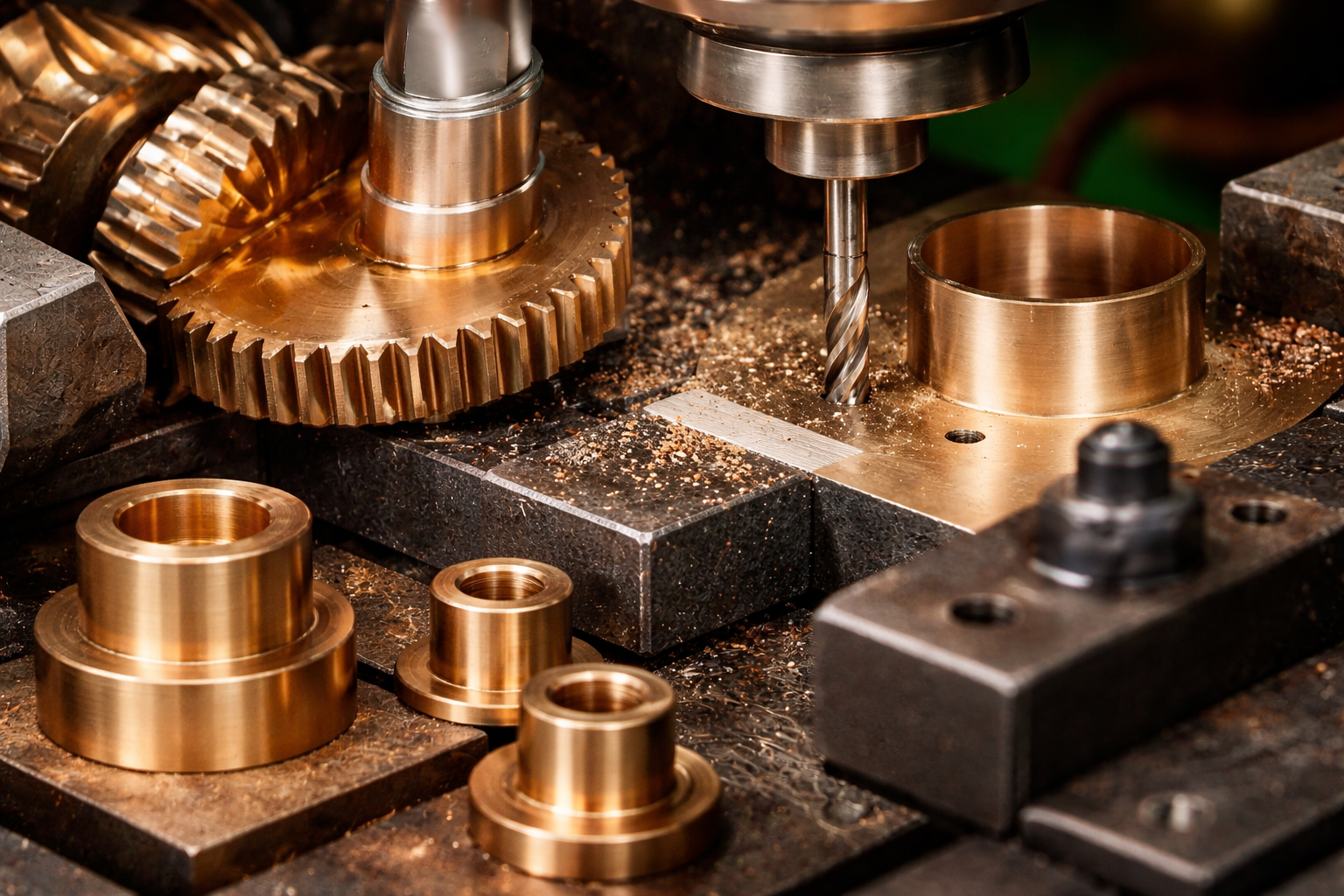
XY-GLOBAL manufactures custom brass parts from 2D drawings and 3D models.
We provide CNC turning, CNC milling, mill-turn machining and 5-axis machining. Orders can start with one prototype and continue into repeat production.
Brass is easy to cut, but this does not mean every brass part is easy to produce. Thin walls can deform. Plating can change fit dimensions. Threads and small holes can become unstable during long production runs.
We review these risks before production starts.

Brass CNC Machining Capabilities
| Item | Capability |
|---|---|
| Processes | CNC turning, milling, mill-turn, 3-axis, 4-axis and 5-axis machining |
| Standard tolerance | ±0.01 mm |
| Precision tolerance | ±0.005 mm |
| Critical features | Some dimensions can be reviewed to ±0.001 mm |
| Surface roughness | Ra 0.8 μm as standard |
| Maximum CNC travel | 1300 × 600 × 600 mm |
| Inspection | CMM, vision measurement, roughness tester, thread gauges and pin gauges |
| CMM accuracy | Up to 0.001 mm |
| Order volume | Prototypes, low-volume parts and production runs |
These figures are not default limits for every part.
Final accuracy depends on part size, wall thickness, brass grade, datum design and inspection method. We confirm achievable tolerances after reviewing the drawing.
Custom Brass Parts We Machine
We produce brass components for fluid systems, electrical equipment, sensors, industrial machines and medical devices.
Typical parts include brass fittings, adapters, valve bodies, valve stems, bushings, sleeves, threaded inserts, electrical connectors, sensor shafts, nozzles and small instrument parts.
We can machine internal and external threads, precision bores, cross holes, grooves, tapers, sealing faces and thin-wall features.
For complex parts, we try to complete more features in one setup. This reduces handling and helps control position and concentricity.

Brass Grades
We machine brass grades under UNS, EN, DIN, JIS and GB standards.
| Grade | Main Feature | Typical Applications |
| C36000 | Good machinability | Fittings, inserts, bushings and threaded parts |
| C26000 | Good formability | Electrical parts, covers and decorative parts |
| C46400 | Better resistance in wet environments | Marine hardware and fluid parts |
| C69300 | Lead-free brass | Water fittings and regulated products |
| CuZn39Pb3 | Common European free-cutting brass | Turned parts and valve components |
| H59 / H62 | General-purpose brass | Hardware and industrial parts |
Material condition can affect hardness, strength and machining performance.
For drinking water, food, medical or other regulated products, include the required material standard in your RFQ. Material certificates can be supplied when required.
We do not change the specified brass grade without approval.
CNC Turning, Milling and Mill-Turn Machining
CNC turning is mainly used for round parts. Typical features include outside diameters, bores, threads, grooves and tapers.
CNC milling is used for non-round parts. It is suitable for slots, pockets, mounting holes, sealing faces and complex profiles.
Mill-turn machining combines both processes. It is often used for parts with round bodies, cross holes, flats or off-centre features.
Completing these features in one setup can improve position accuracy and reduce production time.

Common Brass Machining Problems
Plating Changes the Final Size
Nickel, tin and chrome plating add thickness to the part surface.
This can affect threads, precision bores, press-fit diameters and sealing faces. We confirm the plating thickness before machining and reserve material where needed.
Critical dimensions can be checked before or after plating. The inspection stage should be stated on the drawing.
Thin Walls Become Distorted
Thin brass parts may bend under clamping force.
We may use soft jaws, custom fixtures and step machining. Critical features are often finished during the final operation.
This reduces deformation and improves batch consistency.
Small and Deep Holes Are Unstable
Small holes need clear requirements for diameter, depth, position and burr control.
Deep holes may also require special tools or extra inspection. If the depth-to-diameter ratio creates a risk, we explain it during quotation.
Samples Pass but Production Quality Drops
Sample production and volume production are not the same.
For repeat orders, we control the material source, machine setup, fixture, cutting tools, inspection method and finishing supplier.
This makes the approved sample easier to reproduce in later batches.
Surface Finishes for Brass Parts
Brass parts can be supplied as-machined, polished, brushed or sandblasted.
We also provide nickel plating, tin plating, chrome plating and protective coatings.
The finish should match the function of the part:
- Nickel plating can improve wear and corrosion resistance.
- Tin plating is often used for soldering and electrical parts.
- Chrome plating can improve hardness and appearance.
- Polishing and brushing are mainly used for visible surfaces.
Plating can affect electrical contact, thread fit and final dimensions. The coating type and thickness should be confirmed before production.
Inspection and Quality Control
XY-GLOBAL operates under ISO 9001 and ISO 13485 quality management systems.
Inspection methods are selected according to the drawing. They may include CMM measurement, vision measurement, thread gauges, pin gauges and surface roughness testing.
Available documents include:
- Material certificates
- First Article Inspection reports
- Full dimensional reports
- CMM reports
- Surface roughness reports
- Plating thickness reports
- Shipment inspection reports
- RoHS or related compliance files
Critical dimensions are checked during production, not only before shipment.
For parts that require 100% inspection, state this requirement during quotation.
Prototype and Production Orders
Prototype orders are mainly used to check fit, function, tolerance and surface finish.
Production orders require more control. We review material supply, fixture design, tool life, inspection frequency, finishing batches and packaging.
For long-term or annual orders, we can review the unit price and production plan based on expected volume.
We also provide a free DFM review before production. This review may identify difficult tolerances, deep holes, thin walls or coating risks.

Industries We Serve
Fluid Control
We machine valve parts, fittings, nozzles and adapters. Key requirements often include thread fit, sealing surfaces and plating allowance.
Electrical and Electronics
Typical parts include terminals, connectors and conductive mounting parts. Burr control and surface plating are often important.
Automotive and Sensors
We produce sensor shafts, small valve parts, sleeves and precision fittings. These parts often require stable concentricity and batch consistency.
Medical and Laboratory Equipment
Lead-free brass may be required for some components. Material standards and inspection documents should be confirmed before production.
Industrial Equipment
Common parts include bushings, threaded inserts, mounting parts and wear components.
How to Request a Quote
Send us:
- A 2D drawing
- A 3D model
- The brass grade
- Prototype and production quantities
- Surface finish
- Critical tolerances
- Inspection requirements
- Target delivery date
Mark fit dimensions, threads, roughness, plating thickness and burr-sensitive areas clearly on the drawing.
Standard RFQs can often be reviewed within 24 hours. Complex parts may need an engineering review first.
We point out material and process risks during quotation. We do not wait until production to raise them.
FAQ
Is there a minimum order quantity?
There is no fixed MOQ for standard projects. We support prototypes, small batches and production runs. Special brass grades may have a minimum raw material order.
Do you charge for samples?
Sample costs depend on material, machining time, finishing and inspection. The DFM review is free.
Can you machine lead-free brass?
Yes. C69300 and other lead-free grades can be reviewed. Please provide the required grade and compliance standard.
Can you support urgent orders?
Yes, subject to material stock, machine capacity and surface treatment lead time. The delivery date must be confirmed before the order is placed.
Do you provide export packaging?
Yes. We provide protective packaging, labels, commercial invoices, packing lists and shipping support. Available shipping methods include DHL, FedEx, UPS, air freight and sea freight.
What happens if there is a quality issue?
We review the issue against the approved drawing, sample and inspection standard. If the issue was caused by our production, we will agree on rework, replacement or another corrective action.
Request a Brass CNC Machining Quote
Send your brass part drawing, required grade, quantity and finish. Our team will review the design and provide machining feedback and a formal quote.
Send Your Drawing for a Free DFM Review

分享:
12 Common Al Die Cast Defects and Their Causes
Investment Casting vs Die Casting: Materials, Tolerances and When to Use Each