


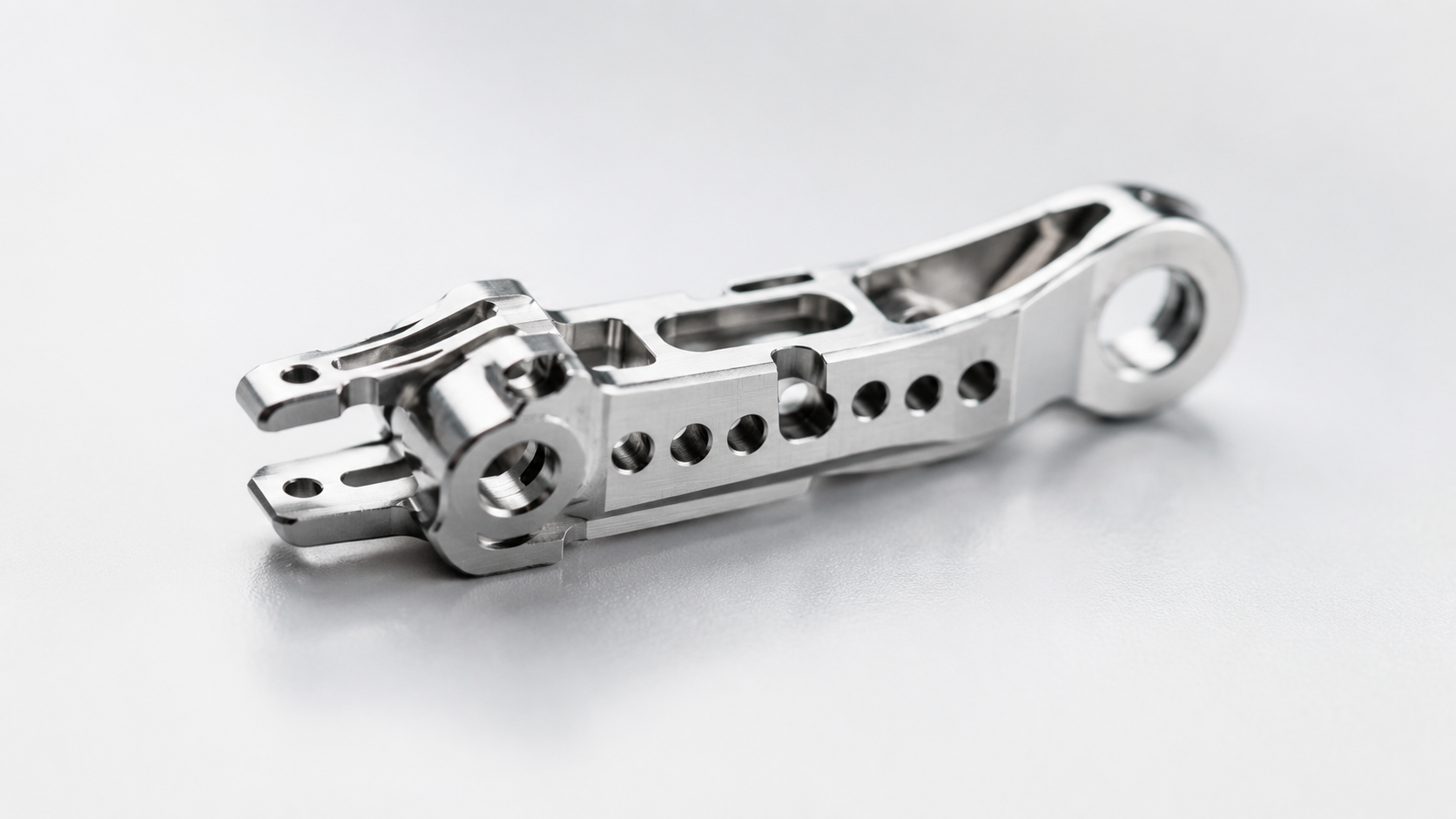
Precision Manufacturing For Small, Complex Medical Parts
A small medical component does not always mean a simple component.
In medical device manufacturing, some of the most challenging parts are often only a few millimeters in size. These components may require extremely tight tolerances, excellent surface finishes, burr-free edges, and consistent performance across multiple production batches.
A typical medical micromachining project may involve a stainless steel component with:
- Part size: 5–30 mm range
- Material: 316L stainless steel or titanium
- Critical tolerance: ±0.01 mm or tighter depending on design requirements
- Surface finish requirement: Ra 0.2–0.8 μm
- Special requirements: burr control, dimensional stability, and repeatability
The challenge is not simply producing one sample part. The real challenge is maintaining accuracy and consistency when the component moves from prototype validation to repeat production.
This is where precision micromachining expertise becomes critical.

A Typical Medical Micromachining Challenge
One common situation we see from medical device companies is a small precision component used inside a larger medical system.
The drawing may look straightforward:
- Several small diameter holes
- Thin wall sections
- Tight positional tolerances
- Complex internal features
- High surface quality requirements
However, these features create manufacturing challenges.
For example, when machining a small stainless steel component, excessive cutting force can cause deformation. A small tool diameter can introduce tool deflection. Improper machining sequences can affect the relationship between critical features.
Before production starts, our engineers typically review:
- Which dimensions are functionally critical?
- How the part should be fixtured?
- The optimal machining sequence?
- Potential deformation risks?
- Inspection methods required after machining?
This early engineering review helps reduce manufacturing risks before the first batch is produced.
Tight Tolerance Control
For miniature components, even small variations can affect assembly performance.
Common challenges include:
- Maintaining hole position accuracy
- Controlling thin-wall deformation
- Reducing dimensional variation between batches
- Managing tolerance changes after surface treatment
XY-GLOBAL supports high precision CNC machining with dimensional control down to ±0.005 mm depending on part geometry and material.
Burr-Free Machining For Medical Applications
Burr control is especially important for medical components.
Unlike general industrial parts, sharp edges or residual burrs may affect:
- Assembly performance
- Cleaning processes
- Product reliability
Our manufacturing process focuses on:
- Optimized cutting parameters
- Appropriate tooling selection
- Edge condition control
- Post-machining inspection

Surface Finish And Clean Machining
Many medical components require smooth surfaces to support proper function and reduce potential contamination risks.
Typical surface requirements may include:
- Precision machined surfaces
- Fine polishing
- Controlled roughness values
- Consistent appearance across batches
Surface finish requirements such as Ra 0.4 μm can be achieved through optimized machining and secondary finishing processes.
XY-GLOBAL Micromachining Capability
Medical device manufacturers need more than machining capability. They need a manufacturing partner who understands precision requirements, quality control, and production consistency.
At XY-GLOBAL, we support medical micromachining projects from prototype development to production manufacturing.
| Capability | Specification |
|---|---|
| CNC machining tolerance | ±0.005 mm depending on geometry and material |
| Surface finish | Ra 0.2–0.8 μm |
| Inspection equipment | CMM, optical measurement, surface roughness testing |
| Manufacturing process | 3-axis, 4-axis, 5-axis CNC machining |
| Materials | Stainless steel, titanium, aluminum, brass, PEEK and engineering plastics |
| Quality system | ISO9001 / ISO13485 |
| Production stage | Prototype, low-volume production, repeat production |
Our engineering team works closely with customers during the early design stage to identify potential machining risks and recommend practical manufacturing solutions.

Materials For Medical Micromachining
Different medical applications require different material characteristics.
XY-GLOBAL supports a variety of materials commonly used for medical components:
| Material | Typical Applications |
|---|---|
| 316L Stainless Steel | Surgical components, medical instruments, precision housings |
| Titanium | Lightweight medical devices and components requiring high strength-to-weight ratio |
| Aluminum | Medical equipment structures and precision mechanical parts |
| PEEK | Medical-grade plastic components requiring chemical resistance and dimensional stability |
| Brass / Copper Alloys | Special precision components and functional assemblies |
Material selection is evaluated together with machining requirements, surface treatment needs, and final application conditions.
From Prototype To Production Manufacturing
Many medical device companies start with a small number of prototype parts before moving into production.
A reliable manufacturing process needs to support every development stage:
Prototype → Design Validation → Small Batch → Production
At XY-GLOBAL, we support:
- Engineering review before quotation
- Prototype machining
- Low-volume production
- Process optimization
- Batch consistency control
Our goal is not only to produce the first successful part, but also to provide a stable manufacturing solution for future production.
Quality Control For Medical Components
Precision medical components require reliable inspection methods.
Depending on part requirements, inspection may include:
- Dimensional inspection
- CMM measurement
- Surface roughness testing
- Material verification
- First Article Inspection (FAI)
- Quality documentation support
For critical features, inspection planning is considered during the manufacturing review stage to ensure the measurement method matches the design requirements.

Applications Of Medical Micromachining
Our micromachining services support various medical-related applications, including:
- Surgical instrument components
- Medical device assemblies
- Diagnostic equipment parts
- Precision mechanical components
- Prototype medical devices
- Custom stainless steel and titanium parts
FAQ
What materials can be used for medical micromachining?
Common materials include 316L stainless steel, titanium, aluminum, PEEK, and other engineering materials. Material selection depends on the application requirements.
How accurate can medical micro parts be machined?
XY-GLOBAL can achieve CNC machining tolerances down to ±0.005 mm depending on part design, material, and inspection requirements.
Can you support prototype and low-volume medical projects?
Yes. We support projects from prototype development and engineering validation to repeat production.
Do you provide inspection reports?
Yes. Inspection support can include dimensional reports, CMM measurement, surface roughness testing, and other quality documentation based on project requirements.
How can I request a quotation?
Send your 2D drawing, 3D model, material requirement, and estimated quantity. Our engineering team will review manufacturability and provide feedback before quotation.
Request A Quote For Medical Micromachining Services
Have a challenging small precision medical component?
Send your drawings and project requirements to our engineering team.
We will review:
- Part manufacturability
- Critical dimensions
- Material selection
- Machining process
- Inspection requirements
Upload your 2D drawing and 3D model today to receive a professional manufacturing evaluation.


공유하다:
Optomechanical Components: Precision CNC Machining for Optical Systems