


What buyers usually want to know
When people search for part manufacturing, they are usually trying to answer a few practical questions. They want to know how a part should be made, which process is suitable, what tolerance is realistic, and how cost changes with quantity.
A drawing may look simple, but the manufacturing route can change the result a lot. The same part may be possible by CNC machining, MIM, CIM, or die casting, but the lead time, unit cost, and achievable accuracy can be very different.

Why process selection matters
Good part manufacturing starts with process selection, not with production. If the process is chosen too quickly, the part may still be made, but cost often goes up later because of extra machining, secondary finishing, or unnecessary inspection.
A useful way to judge a process is to look at four factors together:
- Material
- Geometry
- Tolerance
- Production volume
These four points usually decide whether the project should stay with machining or move to molding or casting.
CNC machining is often the first step
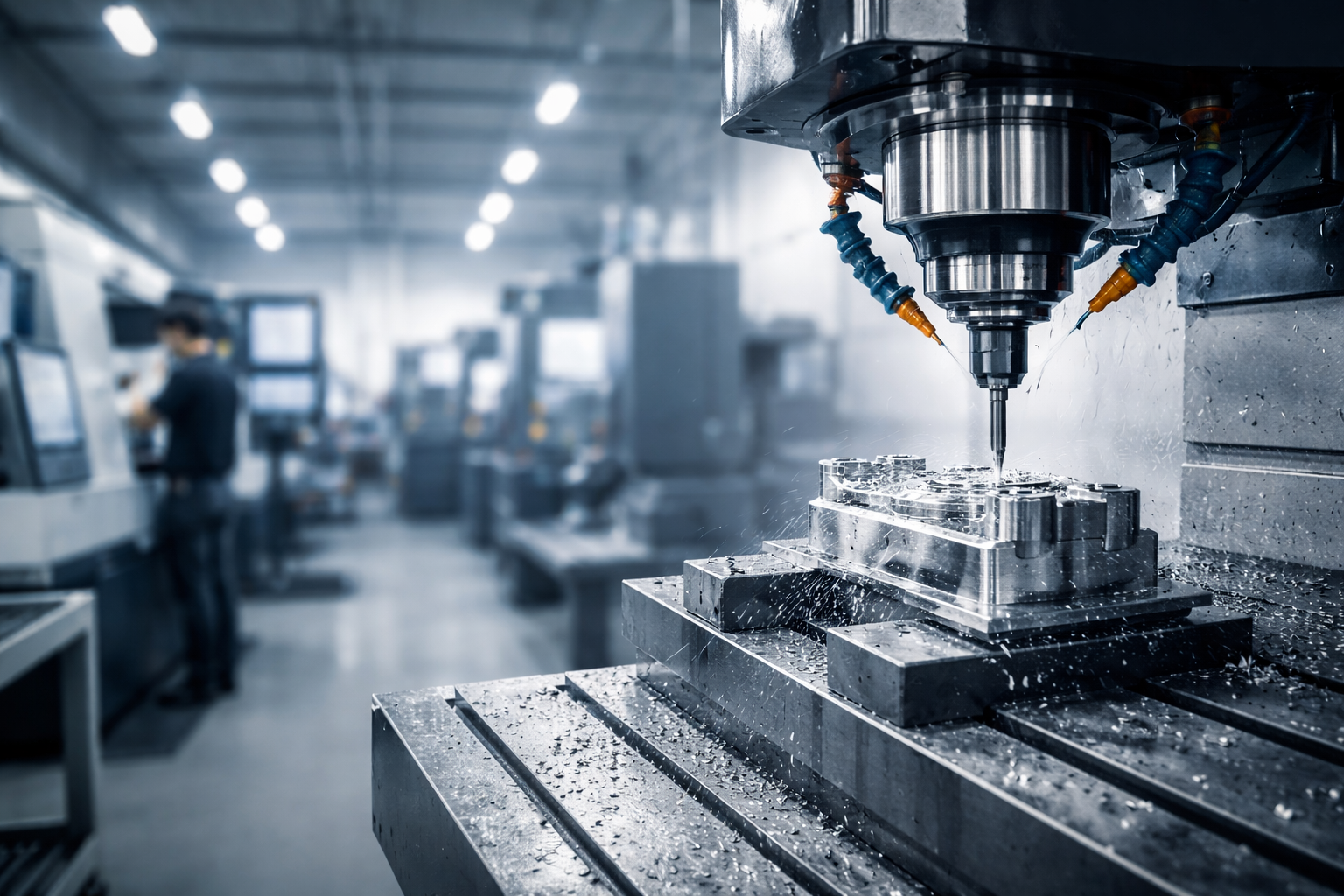
For prototypes and low-volume parts, CNC machining is usually the most direct option in part manufacturing. It works well for materials such as aluminum 6061, stainless steel 304, 316L, titanium, brass, and engineering plastics.
In many projects, CNC can achieve:
- General tolerance: ±0.01 mm
- Critical features: tighter depending on structure
- Surface finish: Ra1.6 to Ra0.8, or better on key areas
This is why CNC is often used at the sample stage, especially when the drawing is still changing.

Volume changes the right manufacturing route
A process that works well for 20 parts may not be the right one for 20,000 parts. This is one of the most important ideas in part manufacturing.
For example, a small stainless steel part may be machined for 20–50 pcs because there is no tooling cost. But if the annual demand reaches 5,000 pcs or 10,000 pcs, MIM may become more competitive because it reduces machining time and material waste.
The best process is not fixed. It changes with project stage, quantity, and design maturity.
Material also drives the process
Material choice is another key part of part manufacturing. Different materials naturally fit different processes.
A metal part may go to CNC or MIM. A high-volume aluminum housing may be better for die casting. A ceramic part used for insulation or wear resistance may need CIM instead of metal processing.
Some common examples are:
- Alumina: insulation, wear resistance, service temperature up to 1600°C
- Aluminum nitride: thermal conductivity around 140–180 W/m·K
- 17-4PH stainless steel: common in small structural MIM parts
- 6061 aluminum: common in machined housings and brackets
These examples show why process choice cannot be separated from material requirements.

Tolerance should match function
Many drawings make every dimension look equally important, but that is rarely true in real part manufacturing.
A mounting surface may need ±0.01 mm, while a non-critical outer edge may be fine at ±0.05 mm. If the whole drawing is controlled too tightly, machining time, inspection time, and reject risk all increase.
So the better approach is simple:
control critical features tightly, and relax non-critical dimensions where possible.
This usually improves both cost and lead time.
A simple case example
Take a small stainless steel locking part as an example.
At the beginning, the customer only needs 30 sample pieces. In this case, CNC machining is the better choice because the design may still change and there is no need to invest in tooling.
Later, after testing is complete, the annual demand grows to 20,000 pcs. At that point, the same part may be better produced by MIM. The reason is not that the part changed, but that the production target changed. With stable geometry and higher volume, MIM can reduce unit cost more effectively.
This is a common situation in part manufacturing:
prototype process and mass production process are often not the same.
DFM helps reduce cost before production starts
Many manufacturing problems start in the drawing, not in the workshop. Deep pockets, sharp internal corners, unrealistic wall thickness, or too many unnecessary tight tolerances can all make production harder.
A DFM review often helps solve this early by making small changes such as:
- increasing corner radius
- reducing unnecessary tolerance
- improving tool access
- separating cosmetic and functional surfaces
These are not big design changes, but they can make a real difference in yield, machining time, and delivery stability.

Final thought
In the end, good part manufacturing is about using the right process at the right stage. The most suitable route depends on material, geometry, tolerance, and volume together.
If these points are reviewed early, the part is usually easier to quote, easier to produce, and easier to scale from prototype to mass production.

分享:
Flexure Optical Mirror Mount: Design and Precision Machining Considerations
What Are the Differences Between Low-Pressure and High-Pressure Die Casting?