


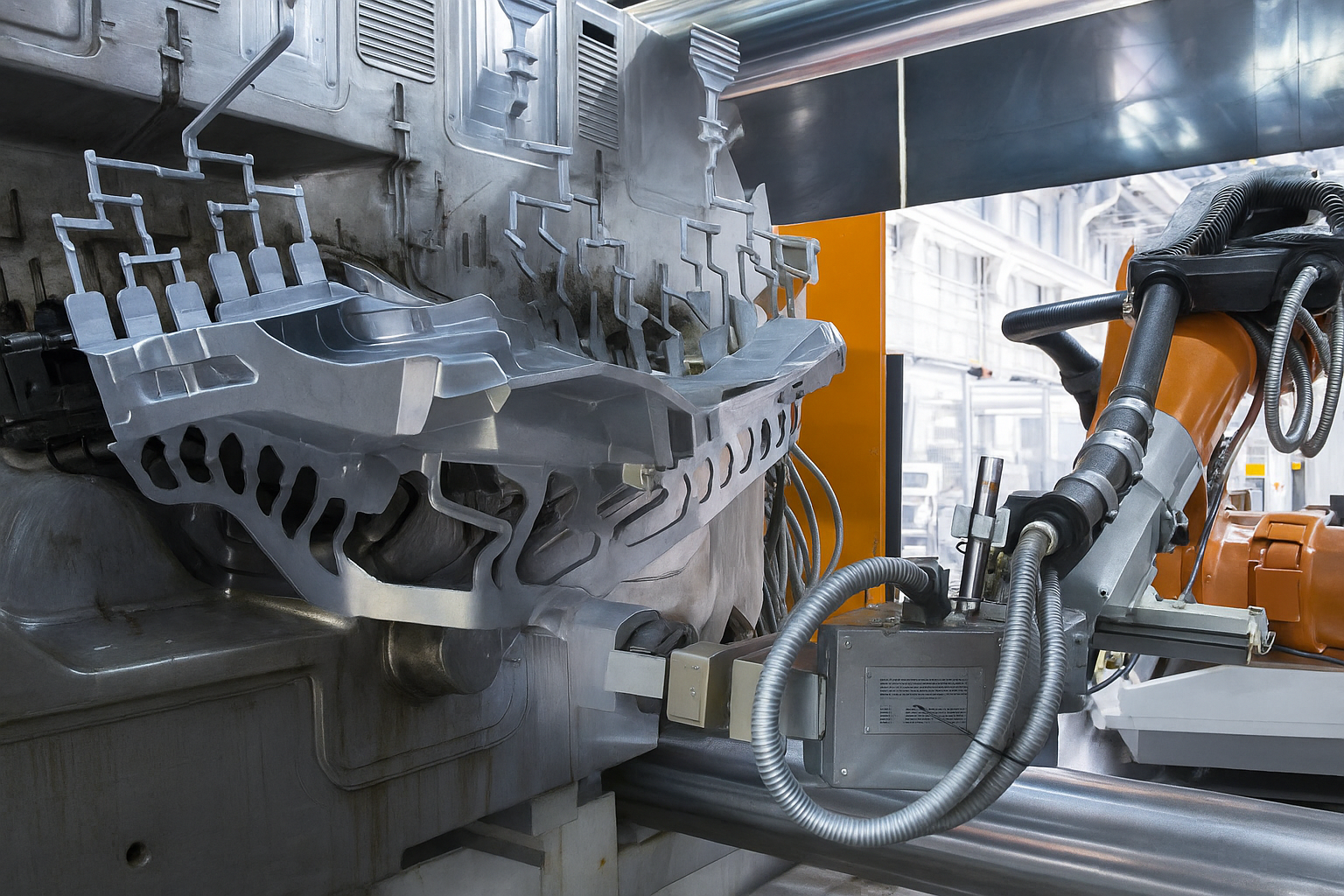
다이캐스팅 기술은 오늘날 특히 경합금 부품에 널리 사용됩니다. 그러나 많은 구매자와 엔지니어는 저압 다이캐스팅(LPDC)과 고압 다이캐스팅(HPDC)의 차이점을 여전히 불분명하게 생각합니다. 이는 소량 다이캐스팅 생산과 대량 생산 중에서 선택할 때 특히 그렇습니다. 차이점을 더 잘 이해하려면 먼저 각 공정이 어떻게 작동하는지 살펴보는 것이 도움이 됩니다.
저압 다이캐스팅(LPDC)
저압 다이캐스팅에서 금형은 용융 금속으로 채워진 밀폐된 도가니 위에 놓입니다. 압축 가스는 용융 금속 표면에 0.06–0.15 MPa의 저압을 생성하여 금속을 상승 튜브를 통해 위로 밀어 금형 캐비티로 보냅니다. 그런 다음 주조품은 제어된 조건에서 응고됩니다.
LPDC는 몇 가지 분명한 이점을 제공합니다. 압력이 용융 금속을 캐비티로 계속 공급하기 때문에 주조품은 높은 치수 정확도와 밀도 높은 내부 구조를 가집니다. 금속이 슬래그가 덜 들어갈 가능성이 있는 용융 표면 아래에서 인출되므로 최종 부품도 더 깨끗합니다. 낮은 가스 다공성은 기계적 강도를 향상시키고 LPDC 부품을 열처리에 적합하게 만듭니다. 이 공정은 복잡한 중간 두께 부품에 자주 사용되며, 최소 벽 두께는 일반적으로 3 mm입니다.
LPDC는 일부 소량 다이캐스팅 생산 프로젝트에서도 실용적인 선택입니다. 특히 부품이 HPDC가 제공할 수 있는 것보다 더 나은 내부 품질, 열처리 기능 또는 더 안정적인 기계적 특성을 요구할 때 그렇습니다. 생산 속도는 낮지만, 부품 성능이 사이클 시간보다 더 중요할 때는 LPDC가 더 적합할 수 있습니다.
고압 다이캐스팅(HPDC)
고압 다이캐스팅에서 용융 금속은 15–100 MPa의 압력으로 약 10–80 m/s의 충전 속도로 다이 캐비티에 주입됩니다. 캐비티는 빠르게 채워지고 금속은 빠르게 응고됩니다.
HPDC의 주요 장점은 매우 높은 효율성입니다. 짧은 사이클 시간은 대량 생산에 이상적입니다. 또한 일반적으로 Ra 6.3 µm, 경우에 따라서는 Ra 1.6 µm의 우수한 표면 마감을 제공합니다. 또 다른 주요 이점은 얇은 벽 부품을 생산할 수 있다는 점으로, 벽 두께는 0.3–0.5 mm까지 낮출 수 있습니다.
그러나 HPDC 부품은 일반적으로 LPDC 부품보다 다공성이 높고 밀도가 낮습니다. 이는 기계적 강도를 감소시키고 일반적으로 열처리에 부적합하게 만듭니다. 가열 중에 갇힌 가스가 팽창하여 물집이 생기거나 균열이 발생할 수 있기 때문입니다. HPDC 부품은 또한 큰 가공 여유가 권장되지 않습니다. 밀도가 높은 표면층을 제거하면 부품 강도가 감소할 수 있기 때문입니다. 대부분의 경우 권장 가공 여유는 0.25 mm 미만입니다.

이러한 이유로 HPDC는 일반적으로 대규모 생산에 더 나은 선택이지만, 프로젝트가 내부 품질, 후처리 또는 열처리에 더 중요한 비중을 둘 때는 소량 다이캐스팅 생산에 덜 적합할 수 있습니다.
요약
| 특징 | 저압 다이캐스팅 | 고압 다이캐스팅 |
|---|---|---|
| 압력 | 0.06–0.15 MPa | 15–100 MPa |
| 충전 속도 | 느리고 제어됨 | 빠름 (10–80 m/s) |
| 효율성 | 보통 | 매우 높음 |
| 벽 두께 | ≥ 3 mm | 0.3–0.5 mm |
| 다공성 | 낮음 | 높음 |
| 열처리 | 적합 | 부적합 |
| 표면 마감 | 좋음 | 우수 |
| 일반적인 적용 | 복잡하고 중간 두께의 부품; 일부 소량 다이캐스팅 생산 | 얇은 벽, 대량 생산 |
결론
간단히 말해, 저압 다이캐스팅은 더 나은 내부 품질, 낮은 다공성 및 열처리 기능을 제공하여 더 높은 강도와 후처리가 필요한 부품에 적합합니다. 또한 주조 품질이 속도보다 더 중요할 때는 소량 다이캐스팅 생산에도 합리적인 선택이 될 수 있습니다. 반면 고압 다이캐스팅은 빠른 사이클 시간과 표면 마감이 주요 우선순위인 얇은 벽 부품의 대량 생산에 더 적합합니다.

공유하다:
부품 제조: 정밀 부품에 적합한 공정 선택
맞춤형 금속 부품을 위한 정밀 광학 가공