


Medizinische Geräte werden oft mit Elektronik, Software und fortschrittlicher Diagnostik in Verbindung gebracht, aber ihre tatsächliche Leistung hängt immer noch von physischen Teilen ab.
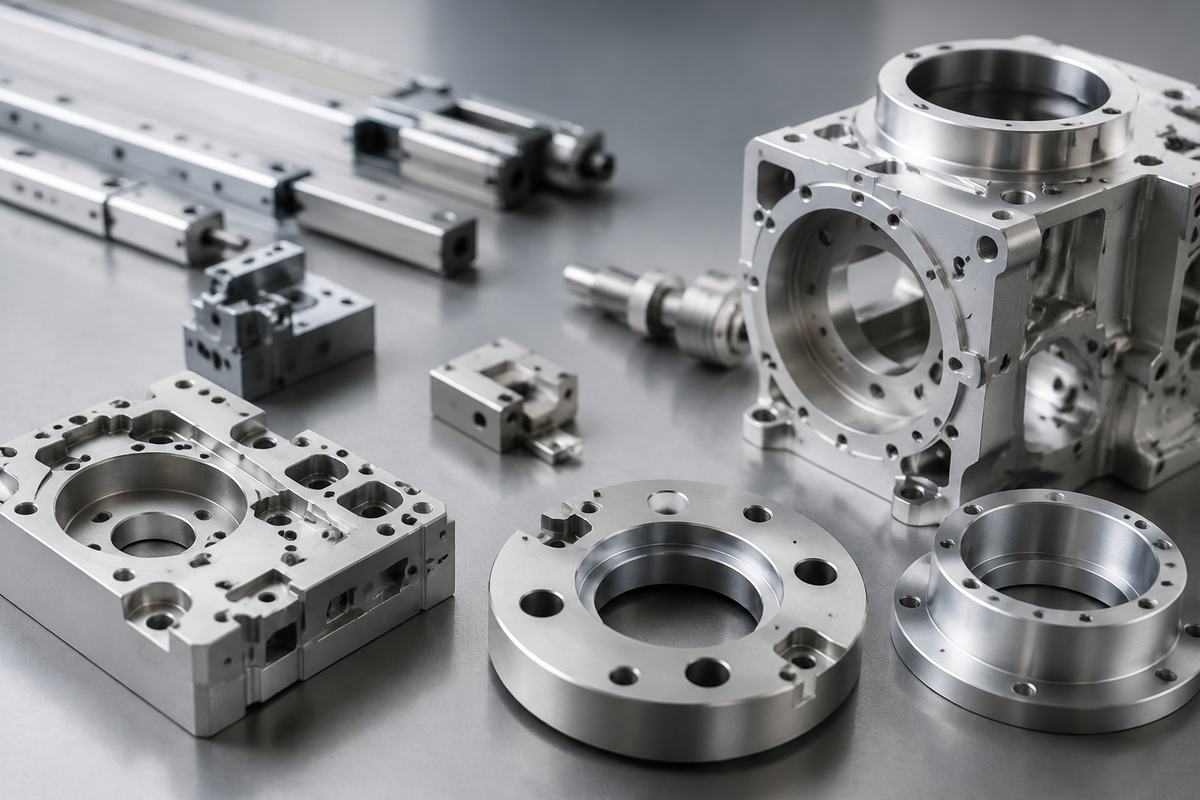
Hinter jedem Bildgebungssystem, chirurgischen Instrument, Analysator oder tragbaren Gerät stecken gefräste medizinische Komponenten, die Baugruppen zusammenhalten, Bewegungen unterstützen, interne Module schützen und Maßhaltigkeit gewährleisten.
Diese Teile sind nicht einfach nur „Metallstücke, die mittels CNC gefertigt werden“. In vielen Fällen sind sie die Teile, die bestimmen, ob ein Gerät reibungslos montiert werden kann, ob empfindliche Module ausgerichtet bleiben und ob ein Produkt ohne ständige Designänderungen vom Prototyp zur wiederholbaren Produktion übergehen kann.
Deshalb spielen bearbeitete medizinische Komponenten auch weiterhin eine wichtige Rolle in der modernen Gerätefertigung, selbst wenn andere Produktionstechnologien immer weiter fortschreiten.

Was bearbeitete medizinische Komponenten wirklich sind
Bearbeitete medizinische Komponenten sind kundenspezifische Teile, die durch Prozesse wie CNC-Fräsen, Drehen, Bohren und Langdrehen für den Einsatz in medizinischen Geräten und verwandten Ausrüstungen hergestellt werden.
Sie werden typischerweise passend zu einem spezifischen Design gefertigt, anstatt aus Standardkatalogen ausgewählt zu werden. Einige sind sichtbare Außenteile, während andere im Inneren eines Geräts verborgen sind und nur bei der Montage oder Wartung sichtbar werden.
In der Praxis dienen diese Komponenten oft als Gehäuse, Halterungen, Verbinder, Stützen, Ausrichtungselemente, Montagebasen, Abdeckungen, Wellen, Hülsen oder kleine Strukturelemente.
Einige Teile helfen, Sensoren, optische Module oder elektronische Platinen zu positionieren. Andere unterstützen Bewegungssysteme, Fluidhandhabungsbaugruppen oder Strukturen von Handgeräten. Auch wenn das Teil selbst einfach aussieht, kann seine Rolle im Produkt entscheidend sein.
Was diese Teile wichtig macht, ist nicht nur ihre Form, sondern auch ihre Funktion im gesamten Gerät. Eine bearbeitete Komponente kann als Schnittstelle zwischen zwei Subsystemen, als Basis zur Steuerung der Montageposition oder als Struktur dienen, die ein kompaktes Gerät mechanisch stabil hält.
In der Medizintechnik ist diese funktionale Rolle oft wichtiger als das Aussehen des Teils auf einer Zeichnung.
Wo diese Komponenten häufig eingesetzt werden
Bearbeitete medizinische Komponenten werden in vielen Arten von Medizinprodukten eingesetzt, aber ihre Rolle ändert sich je nach Gerätekategorie.
Chirurgische Geräte und Instrumente
In chirurgischen Geräten werden bearbeitete Teile häufig in Griffen, Gehäusen, Klemmen, Kupplungen, internen Stützen, Führungsfunktionen und Verbindungspunkten verwendet. Diese Teile müssen möglicherweise in kompakte Baugruppen passen und gleichzeitig eine zuverlässige Handhabung, Bewegung oder Ausrichtung ermöglichen.
In einigen Fällen ist die bearbeitete Komponente das strukturelle Rückgrat des Werkzeugs. In anderen Fällen unterstützt sie ein Einweg- oder austauschbares Element, während sie die Geometrie des wiederverwendbaren Systems beibehält.
Diagnose- und Bildgebungsgeräte
Diagnose- und Bildgebungssysteme enthalten oft bearbeitete Teile zur Sensorbefestigung, Rahmenstütze, Modulpositionierung, Abschirmstrukturen und internen Hardwareschnittstellen.
Diese Geräte kombinieren typischerweise mehrere Subsysteme wie Optik, Elektronik, Bewegungskomponenten und Gehäuse, daher werden bearbeitete Teile oft verwendet, um diese Systeme stabil und wiederholbar zu verbinden.
Auch wenn das Teil an sich nicht hochkomplex ist, kann es dennoch die Kalibrierung, Modulausrichtung und Montagequalität beeinflussen.
Tragbare und mobile medizinische Geräte
Da immer mehr Medizinprodukte kleiner, leichter und einfacher zu tragen werden, kommen bearbeitete Komponenten oft in tragbaren Gehäusen, internen Rahmen, Präzisionseinsätzen, Befestigungsstrukturen und anschlussbezogenen Merkmalen zum Einsatz.
Bei tragbaren Geräten ist der Platz begrenzt und die strukturelle Anordnung eng, daher können kleine bearbeitete Teile verwendet werden, um eine stabile Montage in Bereichen zu erreichen, in denen geformte Teile allein nicht ausreichen.
Labor- und Analysesysteme
Labor- und Analysegeräte verwenden häufig bearbeitete Komponenten in Probenhandhabungssystemen, flüssigkeitsbezogenen Baugruppen, internen Stützrahmen, Positionierungshardware und Instrumentenmodulen.
Diese Geräte kombinieren in der Regel mehrere Präzisionselemente auf begrenztem Raum, wodurch bearbeitete Teile nützlich sind, um die Layoutkontrolle aufrechtzuerhalten und eine wiederholbare interne Montage zu unterstützen.
In all diesen Anwendungen liegt der Wert von bearbeiteten Komponenten darin, dass sie die Designabsicht in eine physische Struktur umsetzen. Sie helfen Geräten, von Konzeptskizzen und CAD-Modellen zu realen, baubaren Produkten zu werden.

Warum bearbeitete Teile auch heute noch wichtig sind
Die moderne Gerätefertigung umfasst viele Produktionsmethoden, darunter Spritzguss, Druckguss, additive Fertigung und pulverbasierte Verfahren. Jedes hat seinen Platz.
Doch bearbeitete Komponenten bleiben hochrelevant, da sie Probleme lösen, die viele andere Verfahren nicht so gut lösen, insbesondere während der Entwicklung und frühen Produktion.
Ein Grund ist die Flexibilität. Die Entwicklung medizinischer Geräte beinhaltet oft Designänderungen, iterative Builds und technische Updates. Wenn ein Team immer noch eine Struktur anpasst, eine Passung testet oder eine Montageschnittstelle verfeinert, ist die Bearbeitung normalerweise eine der schnellsten und praktischsten Methoden, um Revisionen in physische Teile umzuwandeln.
Ein weiterer Grund ist die funktionale Zuverlässigkeit. Einige Teile werden nicht aus Tradition zur Bearbeitung ausgewählt, sondern weil die Bearbeitung eine bessere Kontrolle darüber bietet, wie das Teil in eine Baugruppe passt.
Wenn eine Komponente als Montagebasis, Ausrichtungsreferenz oder Schnittstelle zwischen kritischen Modulen dient, kann die Bearbeitung einen direkteren Weg zur Validierung bieten als Prozesse, die Werkzeuge oder ein hohes Volumen erfordern.
Die Bearbeitung ist auch wichtig, weil viele medizinische Projekte nicht mit der Massenproduktion beginnen. Ein Produkt kann mit Prototypen beginnen, in Pilotproduktionen übergehen und dann lange Zeit in Klein- bis Mittelserienproduktion verbleiben.
In diesen Fällen sind bearbeitete Teile nicht nur eine temporäre Lösung. Sie können die richtige Lösung während der gesamten Produktlebensdauer bleiben.
Wie sich medizinische Teile von industriellen unterscheiden
Bearbeitete medizinische Komponenten unterscheiden sich in ihrer Geometrie allein nicht immer dramatisch von Industrieteilen. Tatsächlich sehen einige recht gewöhnlich aus.
Der Unterschied liegt oft darin, wie das Teil verwendet wird, wie es mit dem Produkt interagiert und wie gering der Spielraum für Inkonsistenzen ist.
In medizinischen Geräten werden Teile häufig in kompakte Systeme integriert, die Elektronik, Sensoren, optische Elemente, Dichtungen, Bewegungsfunktionen und benutzerseitige Strukturen kombinieren. Das bedeutet, dass das bearbeitete Teil mehr als eine Funktion gleichzeitig beeinflussen kann.
Eine kleine Halterung kann die Montage, die Kabelführung und die Modulstabilität beeinflussen. Ein Gehäuse muss möglicherweise nicht nur die äußere Form, sondern auch die interne Positionierung und den Servicezugang unterstützen.
Medizinprodukteprojekte umfassen in der Regel auch eine umfassendere, funktionsübergreifende Überprüfung. Ein Teil wird nicht nur auf grundlegende Herstellbarkeit geprüft, sondern auch auf Benutzerfreundlichkeit, Montageabfolge, Reinigungsaspekte und das Erscheinungsbild des Produkts.
Manche Teile müssen ansprechend aussehen, weil sie für Kliniker oder Endbenutzer sichtbar sind. Andere sind versteckt, benötigen aber dennoch saubere Kanten, einen stabilen Sitz und eine vorhersehbare Wiederholbarkeit, weil sie sich neben empfindlichen Modulen befinden.
Ein weiterer Unterschied ist, dass sich viele medizinische Produkte durch wiederholte technische Verfeinerung weiterentwickeln. Ein Teil, das in einem ersten Prototyp funktioniert, muss möglicherweise noch geometrische Änderungen erfahren, um die Montageeffizienz zu verbessern, Handhabungsprobleme zu reduzieren oder die zukünftige Produktion stabiler zu gestalten.
In diesem Sinne werden medizinische Teile oft nicht nur durch die Designabsicht, sondern auch durch fortlaufendes Fertigungslernen geformt.

Von Prototypen bis zu fertigen Produktionsteilen
Einer der Hauptgründe, warum die Zerspanung in der Medizintechnik so wichtig bleibt, ist, dass sie den gesamten Produktentwicklungspfad unterstützt, nicht nur eine einzelne Phase davon.
Frühe Designverifikation
Zu Beginn eines Projekts werden bearbeitete Teile oft verwendet, um zu überprüfen, ob ein Design in der realen Welt funktioniert.
Ingenieure müssen möglicherweise Abmessungen, Montagebeziehungen, Bewegungspfade oder die strukturelle Machbarkeit bestätigen, bevor sie sich auf eine andere Produktionsmethode festlegen. Bearbeitete Teile helfen, ein digitales Design in etwas zu verwandeln, das Teams testen, halten und überprüfen können.
Technische Iteration und Verfeinerung
Nur wenige Medizinprodukte gelangen ohne Anpassungen vom Konzept zur Endproduktion. Während der Entwicklung ändern sich Zeichnungen oft aufgrund von Testergebnissen, Montageerkenntnissen oder internen Designverbesserungen.
Die Bearbeitung unterstützt diese Phase gut, da Überarbeitungen in der Regel schneller umgesetzt werden können als bei werkzeugbasierten Prozessen. Dies ermöglicht es Teams, das Produkt zu verfeinern, ohne sich zu früh auf ein Design festzulegen.
Pilotläufe und Kleinserienfertigung
Sobald sich ein Design stabilisiert, gehen die Teams oft zu Pilotläufen oder kontrollierten Kleinserienfertigungen über. Diese Phase ist wichtig, da sie Probleme aufzeigt, die bei Einzelmustern möglicherweise nicht auftreten.
Ein Teil, das als Prototyp akzeptabel war, kann bei wiederholter Fertigung neue Probleme aufdecken, wie z.B. lange Bearbeitungszeiten, instabile Spannvorrichtungen, inkonsistente Kantenqualität oder schwierige Montageabläufe. Die Bearbeitung spielt hier eine nützliche Rolle, da sie es den Teams ermöglicht, nicht nur das Teil selbst, sondern auch die Praktikabilität der laufenden Produktion zu bewerten.
Langfristige Produktionsunterstützung
Nicht jedes Produkt geht nach der Entwicklung von der mechanischen Bearbeitung ab. Einige medizinische Komponenten bleiben während des gesamten Produktlebenszyklus gefertigt, weil ihr Produktionsvolumen, ihre Struktur oder Designvariabilität die mechanische Bearbeitung zur am besten geeigneten Option macht.
Bei solchen Teilen verschiebt sich der Fokus von „Können wir das herstellen?“ zu „Können wir das über die Zeit hinweg konstant herstellen?“
Häufige Herausforderungen bei der Herstellung von Medizinteilen
Bearbeitete medizinische Komponenten mögen in CAD einfach aussehen, aber die reale Fertigung bringt oft mehr Einschränkungen mit sich, als die Zeichnung vermuten lässt.
Eine häufige Herausforderung ist die Teilegröße. Viele medizinische Komponenten sind klein, dünn oder feature-dicht. Kleine Teile können schwierig sicher zu spannen sein, ohne die Maßhaltigkeit oder Oberflächenbeschaffenheit zu beeinträchtigen. Dünne Wände, schmale Nuten, winzige Löcher und mehrseitige Merkmale können das Risiko von Bewegungen während der Bearbeitung erhöhen.
Eine weitere Herausforderung ist die montageorientierte Geometrie. Manche Teile sind als Einzelteile nicht schwer zu bearbeiten, werden aber schwierig, weil sie zu anderen Komponenten in einem kompakten System passen müssen.
Ein Design kann mehrere Referenzflächen, begrenzten Befestigungsraum, enge interne Toleranzen oder Schnittstellen mit Sensoren und Baugruppen umfassen. In diesen Fällen ist die Herstellbarkeit eng damit verbunden, wie das Teil im gesamten Gerät funktioniert.
Konsistenz ist ebenfalls ein großes Problem. Die Herstellung eines akzeptablen Musters unterscheidet sich von der Produktion von Chargen mit wiederholbaren Ergebnissen.
Mit zunehmender Menge werden Variationen bei Spannvorrichtungen, Werkzeugverschleiß, Gratkontrolle, Kantenbeschaffenheit und Bedienung sichtbarer. Dies ist besonders wichtig, wenn das Teil Teil einer präzisen Baugruppe und nicht eine isolierte Komponente ist.
Eine weitere Herausforderung ergibt sich aus der Unsicherheit in der Entwicklungsphase. Medizinische Projekte verlaufen oft schnell, und Designentscheidungen können sich noch entwickeln, während die Beschaffung beginnt.
Das erzeugt Druck, Teile anzubieten, zu bemustern und zu bauen, bevor jedes Designdetail vollständig festgelegt ist. In solchen Situationen stellen Hersteller nicht nur Teile her. Sie helfen den Teams auch zu verstehen, was realistisch ist, was möglicherweise angepasst werden muss und welche Risiken später in der Produktion auftreten könnten.
Fazit
Medizinische Geräte entwickeln sich ständig weiter in Komplexität, Leistung und Designraffinesse, aber der Bedarf an zuverlässigen physischen Komponenten ist nicht verschwunden. Wenn überhaupt, ist er wichtiger geworden.
Moderne Systeme mögen mehr Elektronik, intelligentere Steuerungslogik und eine kompaktere Architektur enthalten, doch sie sind immer noch auf bearbeitete Teile angewiesen, um das Wichtige im Inneren zu halten, auszurichten, zu verbinden und zu schützen.
Deshalb bleiben bearbeitete medizinische Komponenten in der modernen Gerätefertigung unverzichtbar. Ihre Bedeutung beschränkt sich nicht nur auf Präzision im engen Sinne.
Sie liegt in ihrer Fähigkeit, eine reale Produktentwicklung, stabile Montage und praktische Produktion über verschiedene Gerätetypen und Projektphasen hinweg zu unterstützen.
Bei XY-GLOBAL unterstützen wir maßgeschneiderte bearbeitete medizinische Komponenten für eine Vielzahl von Geräteanwendungen, von frühen Prototypen bis zur Serienproduktion. Um mehr über unsere Fertigungsmöglichkeiten für Medizinteile zu erfahren, besuchen Sie bitte unsere Medizinprodukte-Seite.

Aktie:
23 gängige CNC-Bearbeitungsprobleme und praktische Lösungen
CNC-Bearbeitung von optischen Halterungen: Design- und Fertigungsaspekte