


When sourcing aluminum die casting components, price is often the first thing buyers compare. Two suppliers may quote for the same drawing, use the same aluminum alloy, and promise similar delivery times. Yet the finished parts can be very different in dimensional accuracy, surface quality, machining consistency, and overall production cost.
Why does this happen?
Because aluminum die casting is not simply about injecting molten metal into a mold. The quality of a finished component depends on several connected factors: product design, mold structure, alloy selection, casting parameters, machining requirements, and quality control.
For buyers, choosing an aluminum die casting components supplier is therefore about more than finding a factory with die casting machines. It means finding a manufacturing partner who understands how these processes affect the final part.
At XY-GLOBAL, we work with custom metal component projects involving aluminum die casting and precision CNC machining. In this article, we look at some of the practical manufacturing considerations that buyers should understand before starting a new project.

1. The Real Cost of an Aluminum Die Casting Part Starts With Its Design
One of the most common mistakes in custom manufacturing is evaluating a component only after the drawing has been finalized.
By that stage, important decisions have already been made. Wall thickness, structural features, draft angles, parting lines, and machining allowances may all affect mold complexity and production efficiency.
Consider an aluminum housing with several mounting bosses, internal ribs, and threaded holes.
A design that looks straightforward in CAD may present several manufacturing challenges:
-
Uneven wall thickness can cause different cooling rates and increase the risk of shrinkage defects.
-
Poorly positioned ribs can create local thick sections and surface sink marks.
-
Insufficient draft angles can make part ejection difficult and increase die wear.
-
Complex undercuts may require additional mold slides, increasing tooling cost and maintenance.
-
Critical holes and mounting surfaces may require secondary CNC machining.
These issues are much easier to address before the mold is manufactured.
Why DFM Review Matters
Design for Manufacturability (DFM) is an important step before tooling begins.
During a DFM review, the supplier should examine the actual geometry and consider how the component will be filled, cooled, ejected, machined, and inspected.
For example, if a mounting hole requires a tight positional tolerance, it may be better to leave sufficient material for CNC machining rather than expecting the casting process alone to achieve the final dimension.
Similarly, a thick section that serves no structural purpose may be redesigned to reduce material usage and improve cooling consistency.
The objective is not simply to make the component easier to manufacture. It is to find a design that meets functional requirements while keeping tooling and production costs under control.
Our recommendation: Involve your die casting supplier during the design stage, not just when requesting a quotation.
2. ADC12 or A380? Choosing the Right Aluminum Alloy
ADC12 and A380 are two commonly specified aluminum alloys for high-pressure die casting.
They are often mentioned together because they serve many similar applications. However, they are not identical materials, and they should not automatically be treated as interchangeable.
The choice should depend on the component's geometry, mechanical requirements, operating environment, and finishing process.
| Comparison | ADC12 | A380 |
|---|---|---|
| Standard | JIS | ASTM |
| Main characteristics | Good fluidity and castability | Good strength and castability |
| Silicon content | Approximately 9.6–12% | Approximately 7.5–9.5% |
| Typical applications | Complex housings, thin-wall components | Mechanical housings, brackets, automotive components |
| Main consideration | Suitable for complex casting geometries | Widely used for general-purpose die cast components |
Composition ranges are indicative. Always confirm the applicable material specification and supplier material certificate.

When Should You Consider ADC12?
ADC12 is frequently used for components with relatively complex shapes and detailed features.
Its higher silicon content generally supports good molten-metal fluidity, helping metal fill intricate mold cavities.
It is commonly considered for:
-
Electronic equipment housings
-
Mechanical enclosures
-
Complex structural components
-
Components with relatively thin sections
When Should You Consider A380?
A380 is widely used in North American die casting applications and offers a practical balance of strength, castability, and machinability.
Typical applications include:
-
Automotive components
-
Industrial equipment housings
-
Mechanical brackets
-
General-purpose structural components
However, neither alloy is automatically the better choice for every project.
For components exposed to moisture, chemicals, or outdoor environments, corrosion resistance should also be evaluated. Surface protection may be necessary depending on the application.
One important point: ADC12 is not simply another name for A380. Their chemical composition requirements differ. If a drawing specifies a particular alloy, any proposed substitution should be reviewed and approved before production.
3. Why Casting Quality Can Affect CNC Machining
This is an area that buyers sometimes overlook.
A die-cast component may look acceptable after casting, but problems can become visible once CNC machining begins.
For example, a housing may require milling on several mounting surfaces, drilling holes, and machining threaded connections.
If internal porosity or uneven material distribution exists in critical areas, machining may expose defects that were not visible on the original casting surface.
This can lead to:
-
Small surface holes appearing after milling
-
Inconsistent machining results
-
Problems with sealing surfaces
-
Increased rejection rates
-
Additional rework and production costs
The issue is not necessarily the CNC machining process itself. The quality of the original casting also plays an important role.
How Can These Problems Be Reduced?
The first step is to understand which areas of the component are functionally important.
For example:
Mounting surfaces: These may require controlled machining allowances to achieve flatness and assembly accuracy.
Threaded holes: Their positions and machining depths should be considered during mold and part design.
Sealing areas: If a component needs to maintain pressure or prevent liquid leakage, casting integrity and appropriate testing requirements should be discussed before production.
Thin-wall structures: These require careful evaluation of filling and cooling conditions to avoid inconsistent results.
This is why coordinating die casting and CNC machining within the same manufacturing workflow can be valuable.
Instead of treating casting and machining as two unrelated processes, both should be evaluated as part of the finished component's requirements.
4. Mold Design Is More Than Just Creating the Required Shape
A die casting mold determines much more than the external appearance of a component.
Its structure affects how molten aluminum enters the cavity, how air escapes, how the metal cools, and how the finished part is released.
Several mold design factors deserve particular attention.
Gating System
The gating system controls how molten aluminum enters the mold cavity.
Poor gate positioning can contribute to uneven filling, turbulence, cold shuts, or other casting defects.
The design should consider the component's geometry, wall thickness, and filling characteristics.
Venting and Air Evacuation
Air trapped inside the mold cavity can contribute to gas porosity and surface defects.
Venting design and process control are therefore important, especially for components with complex internal structures.
Cooling System
Different areas of a component may cool at different rates.
The mold cooling system helps manage temperature distribution and solidification behavior, reducing the risk of dimensional variation and localized defects.
Ejection and Mold Maintenance
The mold must release the component consistently after solidification.
An appropriate ejection structure helps prevent deformation, sticking, and unnecessary stress during production.
These details may not be visible in the finished product, but they have a direct influence on long-term production stability.
5. Surface Finishing Should Be Considered Before Mass Production
Surface finishing is often treated as the final step. In practice, it should be considered much earlier.
The required appearance and functional performance can influence alloy selection, casting quality, machining allowances, and even mold design.
Different finishing processes also have different requirements.
| Surface Treatment | Typical Purpose | Considerations |
|---|---|---|
| Powder Coating | Protective and decorative finish | Surface preparation and coating thickness |
| Wet Painting | Color and appearance requirements | Adhesion and coating consistency |
| Anodizing | Surface protection and appearance | Alloy composition and die-cast surface quality |
| Electroless Nickel | Functional coating and corrosion protection | Pretreatment and coating specification |
| Polishing | Improved surface appearance | Initial casting surface and machining allowance |
Not every aluminum die-cast alloy is equally suitable for every surface treatment.
For example, conventional high-pressure die-cast alloys can present challenges during anodizing because of their silicon content and casting structure. The final appearance may differ from that of wrought aluminum.
If appearance is important, buyers should specify the required finish, color, surface quality, and acceptance criteria before mass production.
A sample approval process can help confirm whether the actual casting and finishing combination meets expectations.

6. How to Evaluate an Aluminum Die Casting Components Supplier
A supplier's machine capacity is important, but it should never be the only selection criterion.
For international buyers, the more important question is whether the supplier can manage the complete manufacturing requirements of the component.
Here are five areas worth reviewing.
1. Engineering Support
Can the supplier review your drawings and identify potential manufacturing problems before tooling?
A capable engineering team should be able to discuss mold structure, material selection, machining allowances, and production feasibility.
2. Die Casting Capacity
Does the supplier have equipment suitable for your component dimensions and production volume?
Machine capacity should match the projected part size and technical requirements. A larger machine does not automatically mean a better casting solution.
3. CNC Machining Capabilities
If your components require tight tolerances, threaded holes, or precision assembly surfaces, machining capability becomes particularly important.
Ask whether the supplier can coordinate casting and machining and inspect the finished dimensions.
4. Quality Control and Documentation
A professional supplier should understand how to inspect parts against engineering drawings.
Depending on your requirements, this may include:
-
Dimensional inspection reports
-
Material certificates
-
Visual inspection
-
Surface finish inspection
-
Pressure or leakage testing where applicable
Do not simply ask whether a supplier has quality control. Ask what is inspected, how it is measured, and what documentation is available.
5. Production Planning and Delivery
A quotation should explain more than the unit price.
For a new project, buyers should also understand the expected mold development period, sample approval process, production lead time, and delivery arrangements.
A realistic production schedule is more useful than an aggressive promise that cannot be maintained.
7. XY-GLOBAL: From Aluminum Die Casting to Precision Machined Components
At XY-GLOBAL, we understand that customers are not simply purchasing an aluminum casting. They need a finished component that meets their drawings, assembly requirements, and production expectations.
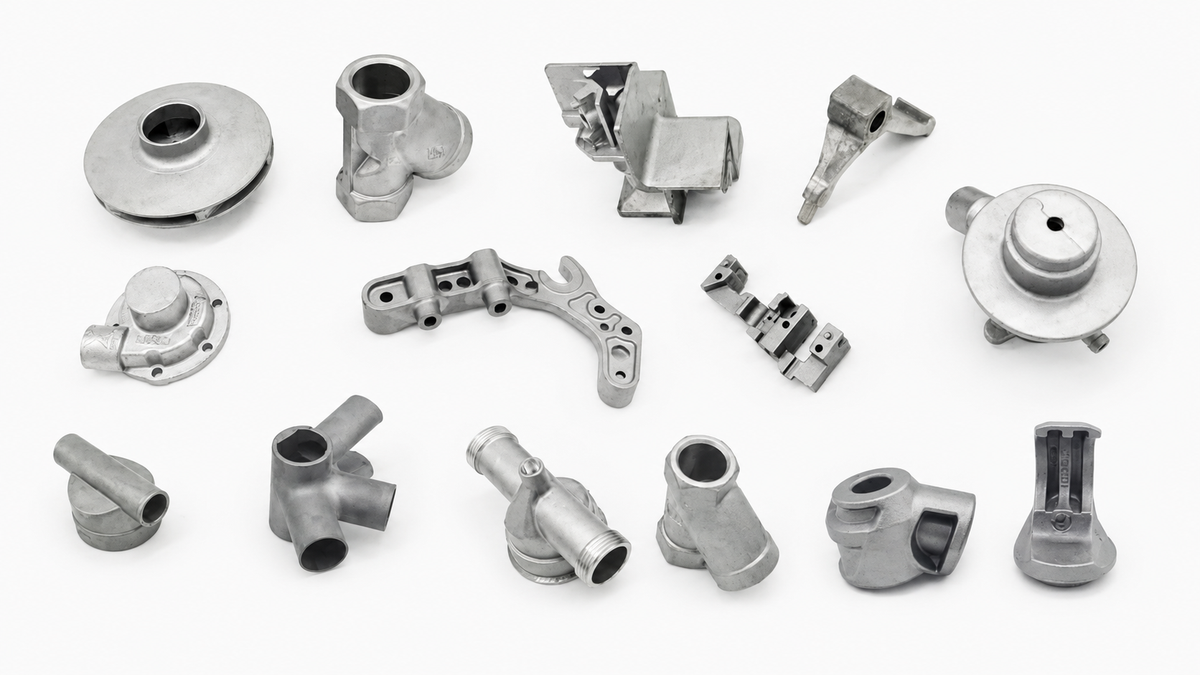
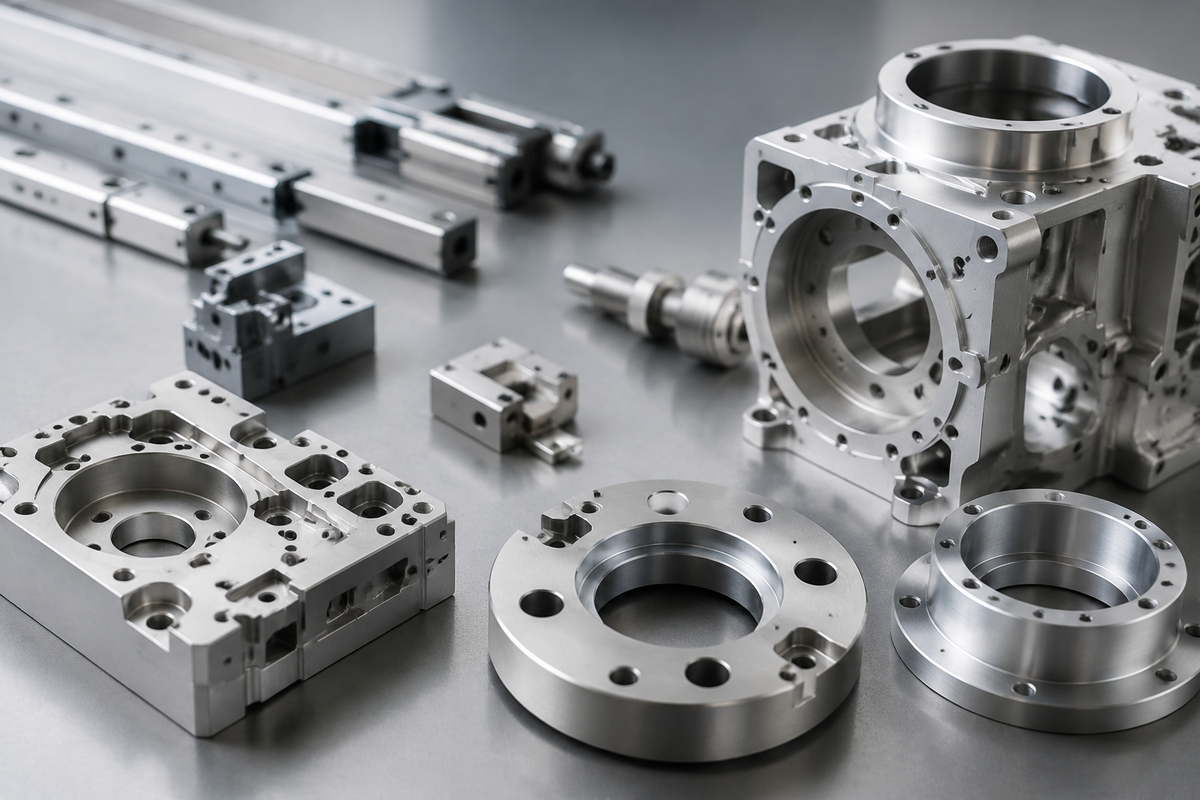
Our manufacturing operations cover aluminum die casting and precision CNC machining, supporting custom metal component projects from development to production.
Aluminum Die Casting
We support custom aluminum die casting projects using commonly specified alloys such as ADC12 and A380.
Our equipment covers a range of production requirements, allowing us to evaluate projects based on component dimensions, structure, and expected production volume.
Precision CNC Machining
For components requiring more accurate dimensions or specific assembly features, CNC machining can be integrated into the manufacturing process.
This includes machining critical surfaces, holes, slots, and threaded features according to customer drawings.
Surface Treatment and Finishing
Different applications require different surface characteristics.
We coordinate suitable finishing options based on the material, product structure, and customer's appearance or functional requirements.
Custom Production Support
Every project starts with understanding the actual component requirements.
We review drawings, evaluate manufacturing feasibility, and consider the relationship between casting, machining, and finishing before production.
Our goal is to provide a coordinated manufacturing solution rather than simply supplying unfinished castings.
8. What Information Should You Prepare Before Requesting a Quote?
A detailed inquiry helps a supplier evaluate your project more accurately and reduces unnecessary communication during the quotation process.
If you are looking for an aluminum die casting components supplier, preparing the following information is a good starting point:
| Information | Why It Matters |
|---|---|
| 2D Drawing / 3D CAD File | Evaluates geometry and manufacturing feasibility |
| Material Specification | Confirms alloy requirements |
| Part Weight or Dimensions | Helps assess machine and tooling requirements |
| Annual or Monthly Quantity | Determines production planning |
| Critical Tolerances | Identifies machining and inspection requirements |
| Surface Treatment | Determines finishing process and cost |
| Application | Helps understand functional requirements |
You do not need to have every detail finalized before contacting a manufacturer.
Even an initial 3D model can provide a useful starting point for engineering discussion.
Final Thoughts: Choose a Supplier Based on the Finished Part, Not Just the Casting Price
A competitive quotation is important, but the lowest initial price does not always result in the lowest overall manufacturing cost.
Tooling modifications, machining defects, inconsistent dimensions, surface finishing problems, and delayed deliveries can all affect the total cost of a project.
The right aluminum die casting components supplier should understand the entire manufacturing process, from the first drawing review to the inspection of finished components.
At XY-GLOBAL, we focus on combining aluminum die casting and precision CNC machining to help customers develop and manufacture custom metal parts.
Have a drawing or an existing component that you want to manufacture?
Send your 2D drawings or 3D CAD files to XY-GLOBAL. Our team can review your requirements and discuss the appropriate manufacturing process for your project.
Visit www.xy-global.com to learn more about our manufacturing capabilities.

Aktie:
CNC Turned Parts Explained: From Machining to Applications
Magnesium Machining: What Makes It Different from Other CNC Materials?