


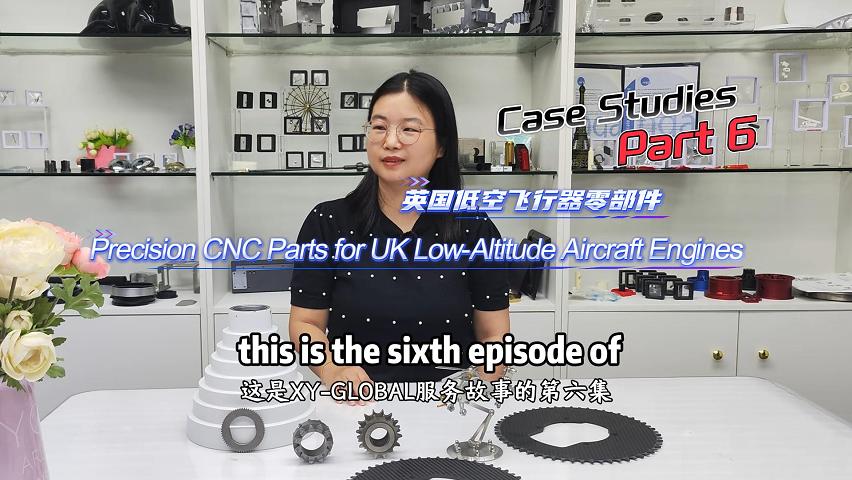
A UK customer approached XY-GLOBAL for a group of components used in a low-altitude aircraft engine power system. The project was related to the development of cleaner and more electrified air platforms, where each part needed to support accurate assembly and reliable functional performance.
This was not a single-process order. The project involved several manufacturing methods, including CNC machining, sheet metal processing, stretch forming, and injection molding.
The main challenge was not producing one individual part. The real difficulty was making sure that different components, produced by different processes, could align correctly during final assembly.
Project Background
The customer is based in the UK. Their parts are used in low-altitude aircraft engine applications, where the final product supports an electrified power system for a new generation of air platforms.
For this type of project, manufacturing quality is not only about dimensional accuracy on a single part. The parts must also fit together correctly after production.
If one component has a small deviation, it may still pass individual inspection. But when several parts are assembled together, small errors can accumulate and cause misalignment, interference, or poor functional performance.
That is why assembly precision became the key focus of this project.

Manufacturing Processes Used
The project required multiple manufacturing methods because the product structure was complex.
| Process | Role in the Project |
|---|---|
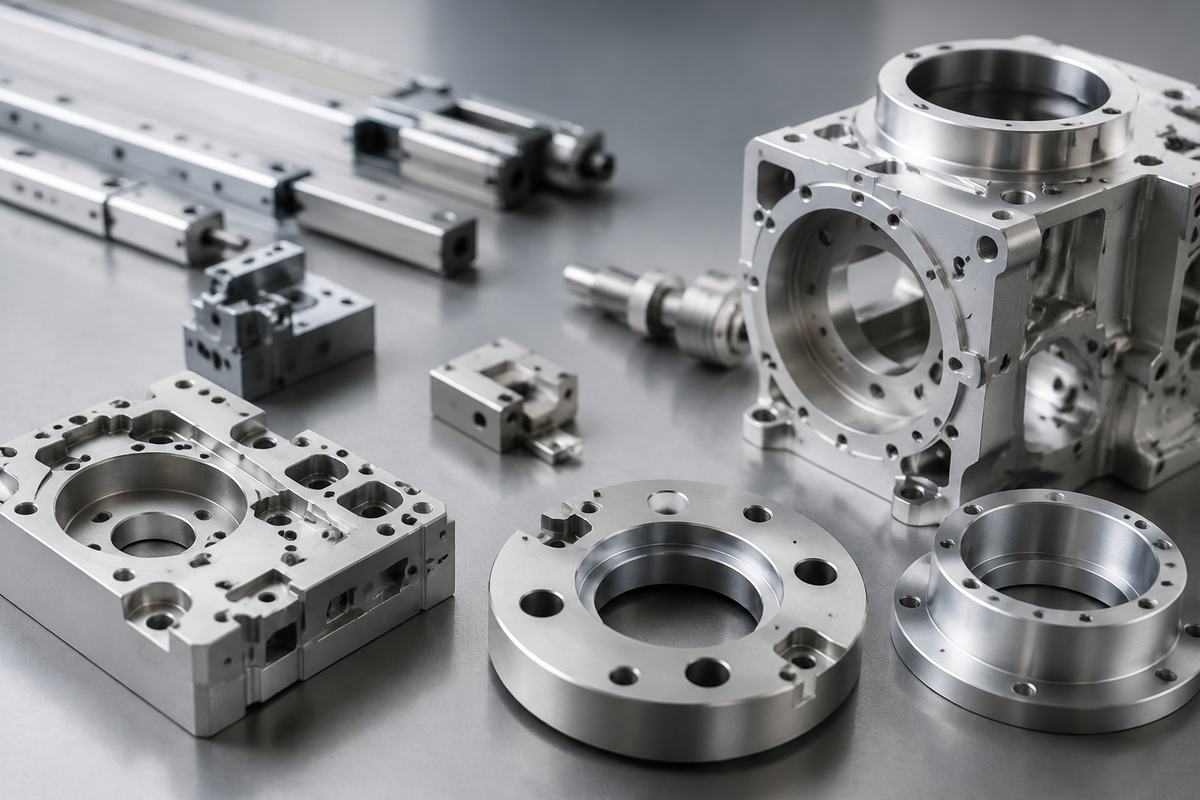
| CNC machining | Used for precision features, holes, mounting areas, and critical interfaces |
| Sheet metal processing | Used for formed structural sections and metal components |
| Stretch forming | Used for shaped parts requiring controlled deformation |
| Injection molding | Used for plastic or supporting components in the assembly |
Each process has different tolerance behavior. CNC machining can control critical features more precisely, while sheet metal and formed parts may be affected by springback or deformation. Injection molded parts also need to consider shrinkage and fit.
The key was to coordinate these processes so the final assembly could meet the functional requirement.
Main Customer Requirement
The customer’s requirement was clear:
The product had to assemble correctly and achieve the expected functional result.
For this project, function was more important than appearance.
The main control points included:
| Requirement | Manufacturing Focus |
|---|---|
| Assembly fit | Control hole positions, mating surfaces, and reference points |
| Functional performance | Ensure the final assembly works as intended |
| Process matching | Coordinate CNC, sheet metal, forming, and molded parts |
| Dimensional stability | Avoid accumulated error during assembly |
| Delivery control | Track each process stage to avoid delays |
| Quality traceability | Keep inspection records at key stages |
This type of project requires engineering review before production, not just manufacturing after receiving drawings.

Technical Challenge: Assembly Misalignment
The biggest risk was component misalignment after production.
Complex structures often include multiple interfaces: holes, slots, bends, molded features, mounting faces, and fastening points. If these features are not controlled together, the final assembly may not fit even when each part is individually acceptable.
Common risks included:
- hole position deviation
- sheet metal forming variation
- injection molding shrinkage
- tolerance stack-up
- datum mismatch between components
- local interference during assembly
- unstable fit between metal and plastic parts
For this project, XY-GLOBAL reviewed the part structure and focused on the dimensions that affected assembly first.
The goal was simple:
make each part manufacturable, and make the full product assemble correctly.
How XY-GLOBAL Controlled the Project
XY-GLOBAL used standardized production management and ISO-based quality control to manage the project.
The project was controlled through three main areas:
1. Process Planning
Before production, the team reviewed the drawings and matched each component with the correct process. Parts requiring tighter features were planned with CNC machining. Formed and molded parts were reviewed for deformation, shrinkage, and assembly fit.
2. Key-Stage Inspection
Inspection was not left until the final stage. Key dimensions were checked during production to reduce the risk of late-stage assembly problems.
Important inspection points included:
- mounting holes
- mating surfaces
- formed areas
- molded interfaces
- assembly reference points
- critical fit dimensions
3. Project Tracking
Because the project involved several processes, lead time control depended on tracking each stage clearly. Standardized workflow and project follow-up helped keep production progress visible and reduced communication gaps.
Final Result
The final delivery exceeded the customer’s expectations. The parts were produced successfully, assembled as required, and met the functional target of the project.
The customer was satisfied with the result, and both sides are now discussing several new projects.
This outcome showed that XY-GLOBAL can support not only single-process machining work, but also complex manufacturing projects involving multiple processes and assembly requirements.

What This Project Shows
This project highlights an important point:
For complex engineering parts, manufacturing success depends on process coordination, not just individual part production.
When a product involves CNC machining, sheet metal processing, forming, and injection molding, the supplier must understand how each process affects the final assembly.
A good supplier should review:
- which dimensions affect assembly
- where tolerance stack-up may occur
- which surfaces need tighter control
- where deformation or shrinkage may happen
- which process should be used for each feature
- how inspection should be planned before production starts
This is especially important for low-altitude aircraft, robotics, medical devices, optical systems, and other products where assembly accuracy directly affects performance.
Work With XY-GLOBAL
XY-GLOBAL supports custom manufacturing projects that involve CNC machining, sheet metal processing, forming, injection molding, and assembly-related quality control.
For complex parts used in low-altitude aircraft systems, robotics, medical devices, optical equipment, and precision mechanical assemblies, our team can review drawings, evaluate manufacturability, plan the right production process, and control key dimensions.
If your project includes complex structures or multiple manufacturing processes, send us your drawings, 3D models, material requirements, tolerance standards, and application details. Our engineering team will review the project and provide practical manufacturing feedback.

Share:
Case Study 28 | From Early Design to Stable Production: A Medical Device Parts Story
Stronger Together: Deep Collaboration with an Australian Mining Leader