


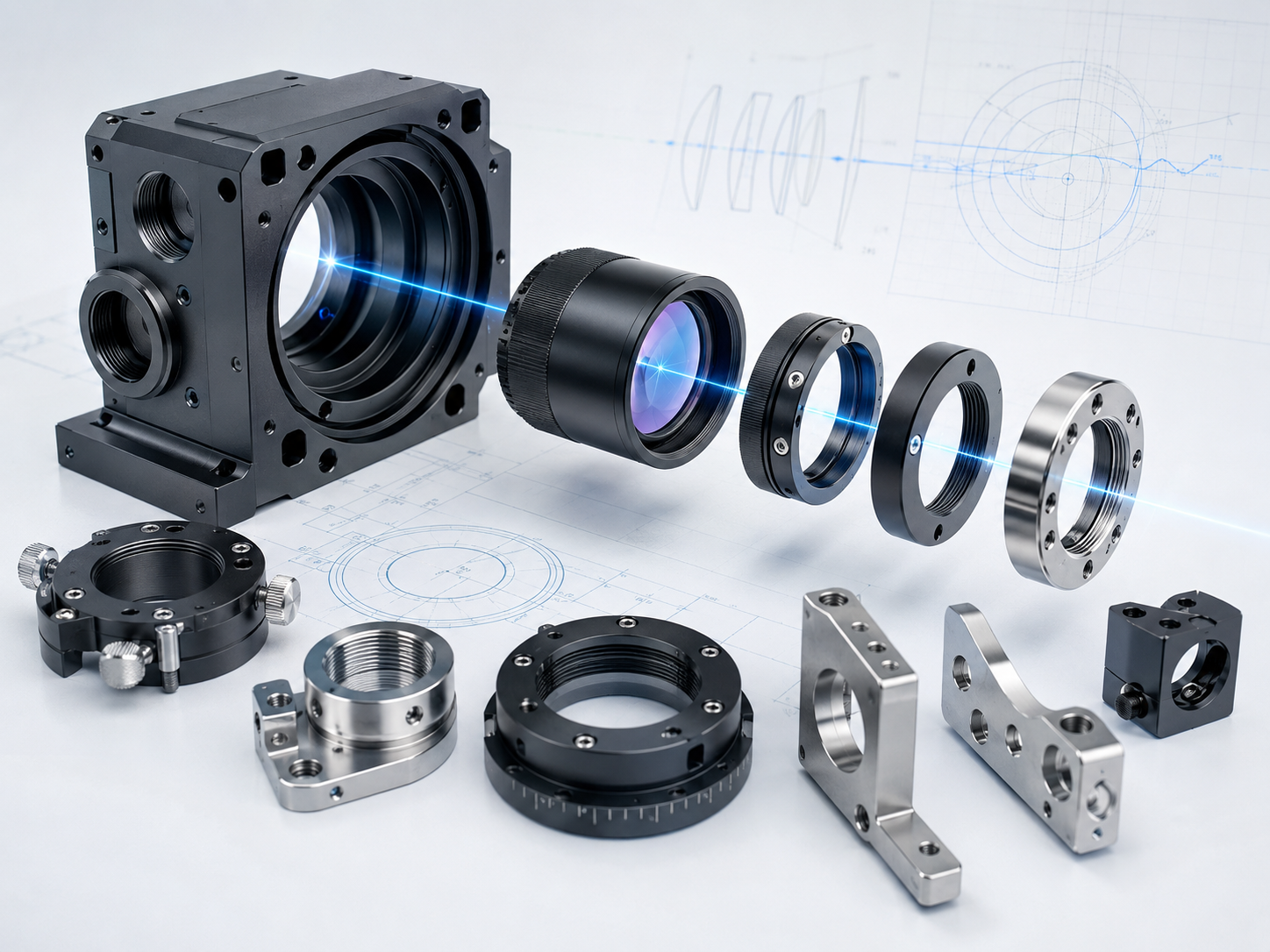
XY-GLOBAL is a custom metal parts manufacturing company supporting CNC machining, die casting, sheet metal fabrication, surface finishing, and dimensional inspection for precision metal components.
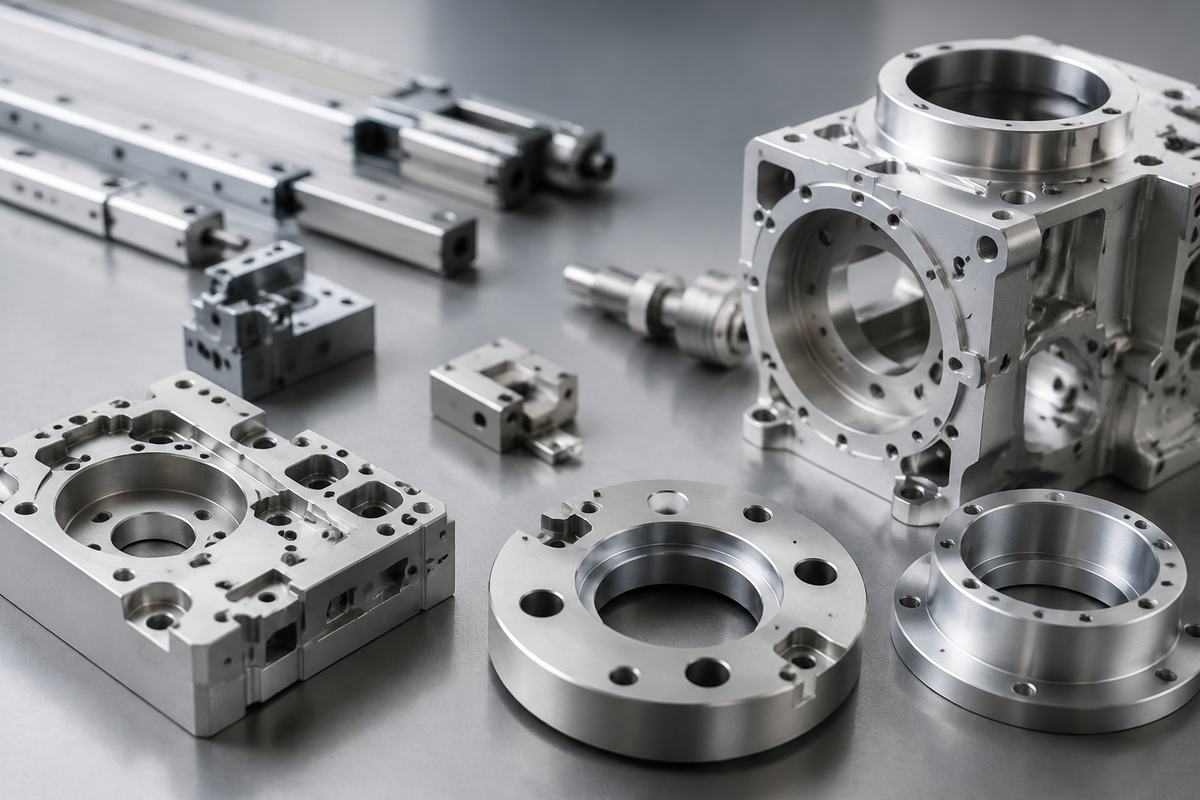
We manufacture custom parts from customer drawings and 3D files, including aluminum housings, stainless steel brackets, titanium components, brass fittings, copper parts, sheet metal enclosures, and die-cast structural parts.
Our projects often involve tight tolerances, cosmetic surfaces, functional assembly requirements, and material-specific manufacturing risks. This is why a good metal parts manufacturing company should not only make the part, but also review the drawing, check manufacturability, confirm the right process, and control quality before shipment.

What Do Metal Parts Manufacturing Companies Do?
Metal parts manufacturing companies turn technical designs into finished components. Customers usually provide 2D drawings, 3D CAD files, material requirements, quantities, surface finish standards, and inspection requirements.
For simple parts, the job may only involve cutting, drilling, bending, or basic machining. For precision metal parts, the process may involve CNC milling, CNC turning, die casting, sheet metal forming, surface treatment, CMM inspection, and final assembly checks.
A reliable supplier should help answer practical questions before production starts:
| Question | Why It Matters |
|---|---|
| Which process is best for this part? | CNC, die casting, and sheet metal have different cost and tolerance advantages. |
| Which material is suitable? | Aluminum, stainless steel, titanium, brass, copper, and zinc alloy behave differently during manufacturing. |
| Which dimensions are critical? | Not every tolerance needs to be extremely tight. Critical features should be controlled first. |
| Will surface finishing affect size? | Anodizing, plating, painting, and passivation may change final dimensions or appearance. |
| What inspection is required? | Precision parts may need CMM reports, thread checks, surface roughness tests, or material certificates. |
This is where an experienced metal parts manufacturing company can reduce risk before material is cut or tooling is made.

Common Metal Parts Manufacturing Processes
Different metal parts need different manufacturing methods. The best process depends on material, part shape, tolerance, quantity, surface finish, and cost target.
| Process | Best For | Common Parts |
|---|---|---|
| CNC Machining | High precision, prototypes, small batches, tight tolerances | Housings, brackets, shafts, sleeves, optical mounts |
| Die Casting | Aluminum or zinc alloy parts with higher volume | Covers, frames, enclosures, structural parts |
| Sheet Metal Fabrication | Thin metal parts, bent parts, panels, covers | Chassis, brackets, cabinets, shields, plates |
| Surface Finishing | Appearance, corrosion resistance, wear resistance | Anodizing, plating, polishing, passivation, painting |
CNC machining is usually the best choice for tight-tolerance parts, low-volume production, and complex mechanical features. Die casting is more suitable for higher-volume aluminum or zinc alloy parts after the design is stable. Sheet metal fabrication is used for panels, covers, brackets, chassis, and formed structures.
Typical Project Example: Aluminum Optical Equipment Housing
One common project for metal parts manufacturing companies is a precision aluminum housing used in optical or camera equipment.
The part may look simple from the outside, but it often has several important manufacturing requirements.
| Item | Typical Requirement |
|---|---|
| Material | Aluminum 6061-T6 or 7075-T6 |
| Process | CNC milling + drilling + tapping |
| Quantity | 10 pcs prototype, then 100–500 pcs batch order |
| Critical tolerance | ±0.02 mm for assembly-related features |
| General tolerance | ±0.05 mm to ±0.10 mm |
| Surface roughness | Ra 1.6 μm or better on visible/functional surfaces |
| Surface finish | Black anodizing, clear anodizing, bead blasting + anodizing |
| Inspection | CMM report for critical dimensions, thread gauge check, appearance inspection |
| Common risks | Thin wall deformation, anodizing color difference, burrs, tight hole position tolerance |
For this type of part, the supplier needs to review the drawing before machining. If the housing has thin walls, deep pockets, or tight flatness requirements, the machining sequence and fixture method should be planned carefully.
If the part requires black anodizing, the supplier also needs to consider surface preparation. Bead blasting can create a more uniform matte appearance, but it may slightly affect sharp edges and surface texture. If the part has tight assembly holes, coating thickness should be considered before production.
This is why custom metal parts manufacturing is not only about cutting metal. It also involves process planning, surface treatment control, inspection, and communication with the customer.

Material Options for Custom Metal Parts
Material choice affects strength, weight, corrosion resistance, machining difficulty, surface finish, and cost.
| Material | Common Use | Notes |
|---|---|---|
| Aluminum 6061 | Housings, brackets, fixtures, optical parts | Easy to machine, good for anodizing |
| Aluminum 7075 | High-strength structural parts | Stronger than 6061, more expensive |
| Stainless Steel 304 | General corrosion-resistant parts | Good corrosion resistance, harder to machine than aluminum |
| Stainless Steel 316 | Medical, marine, chemical environments | Better corrosion resistance than 304 |
| Titanium | Medical, aerospace, lightweight strength parts | Strong and light, but machining cost is higher |
| Brass | Fittings, connectors, electrical and decorative parts | Easy to machine, good appearance |
| Copper | Conductive parts, heat transfer parts | Soft material, requires careful machining |
| Zinc Alloy | Die-cast covers, housings, structural parts | Suitable for higher-volume die casting |
A good metal parts manufacturing company should help customers choose material based on both function and manufacturing feasibility.
Surface Finishing Options for Metal Parts
Surface finishing is important for appearance, corrosion resistance, wear resistance, conductivity, and assembly performance. It should be confirmed before production because it may affect final dimensions.
| Surface Finish | Suitable Materials | Main Purpose |
|---|---|---|
| Anodizing | Aluminum | Corrosion resistance, appearance, wear resistance |
| Black Anodizing | Aluminum | Optical parts, camera housings, anti-reflection surfaces |
| Hard Anodizing | Aluminum | Better wear resistance and surface hardness |
| Bead Blasting | Aluminum, stainless steel | Matte appearance, uniform surface texture |
| Passivation | Stainless steel | Improves corrosion resistance |
| Electropolishing | Stainless steel | Smoother and cleaner surface |
| Nickel Plating | Steel, brass, copper | Corrosion resistance and wear resistance |
| Zinc Plating | Steel | Basic corrosion protection |
| Powder Coating | Aluminum, steel | Durable colored finish |
| Painting | Aluminum, steel, zinc alloy | Appearance and protection |
For precision parts, surface treatment should not be treated as the last step only. It should be considered during quotation and machining planning.
For example, anodizing thickness may affect hole size. Powder coating may affect assembly fit. Polishing may change sharp edges. Black anodizing for optical parts may require a uniform matte surface and clean cosmetic control.

DFM Review Before Manufacturing
DFM means design for manufacturability. It helps find production risks before machining, casting, or forming begins.
| Process | Common DFM Risks |
|---|---|
| CNC Machining | Deep pockets, thin walls, sharp internal corners, small holes, long tool reach |
| Die Casting | Uneven wall thickness, no draft angle, shrinkage, porosity, parting line marks |
| Sheet Metal | Small bend radius, holes too close to bends, welding distortion, flatness issues |
| Surface Finishing | Coating thickness, masking areas, color difference, surface defects |
At XY-GLOBAL, we review drawings and 3D files before production. If we find possible risks, we provide practical suggestions to help reduce cost, improve manufacturability, and avoid delays.
For example, increasing an internal corner radius can reduce machining time. Adjusting wall thickness can improve casting stability. Confirming coating thickness early can prevent final assembly problems.

How to Choose a Metal Parts Manufacturing Company
When comparing metal parts manufacturing companies, price is only one part of the decision. The supplier also needs to control process, quality, communication, and delivery.
| What to Check | What It Means |
|---|---|
| Process capability | Can the supplier support CNC machining, die casting, sheet metal, finishing, and inspection? |
| Drawing review | Can they identify problems before production starts? |
| Material experience | Do they understand aluminum, stainless steel, titanium, brass, copper, and zinc alloy? |
| Surface finishing support | Can they manage anodizing, plating, passivation, painting, or coating? |
| Inspection ability | Can they provide CMM reports, material certificates, or dimensional reports? |
| Prototype and batch support | Can they support both samples and repeat production? |
| Communication | Can they explain technical risks clearly and quickly? |
A strong supplier should help you produce parts that fit correctly, assemble smoothly, and perform reliably in the final product.
Industries We Support
Medical Devices
We manufacture custom metal parts for surgical instruments, endoscope components, camera housings, connectors, and precision sleeves. These parts often require clean edges, stable dimensions, and reliable inspection.

Optical Equipment
We support lens holders, optical mounts, mirror supports, camera housings, black anodized parts, and precision frames. Optical metal parts often require accurate alignment, clean surfaces, and controlled black finish.

Robotics and Automation
We produce motor mounts, brackets, shafts, sensor housings, AGV/AMR parts, and drive system components. These parts need reliable assembly fit and stable mechanical performance.
Electronics
We support aluminum enclosures, heat sinks, shielding parts, connectors, covers, and mechanical structures. These parts may require good appearance, thermal performance, or EMI shielding.
Aerospace and Industrial Machinery
We manufacture lightweight brackets, housings, structural parts, fixtures, and precision mechanical components for demanding mechanical applications.

What to Send for a Quote
To get an accurate quotation, please send clear technical information.
| Required Information | Details |
|---|---|
| 3D CAD file | STEP, STP, IGS, X_T, or similar format |
| 2D drawing | Dimensions, tolerances, threads, surface finish, and key features |
| Material | Aluminum, stainless steel, titanium, brass, copper, zinc alloy, etc. |
| Quantity | Prototype, small batch, or production quantity |
| Surface finish | Anodizing, plating, polishing, passivation, painting, or other finishes |
| Inspection needs | CMM report, material certificate, full dimensional report, or special checks |
| Application | Helps confirm which features are critical for function or assembly |
The more complete the information, the faster and more accurate the quotation will be.
Why Work with XY-GLOBAL?
XY-GLOBAL provides custom metal parts manufacturing services for customers who need precision, flexibility, and engineering support.
Our services include CNC machining, die casting, sheet metal fabrication, surface finishing, DFM review, and dimensional inspection. We work with aluminum, stainless steel, titanium, brass, copper, zinc alloy, carbon steel, and other project-specific materials.
We support prototypes, small-batch orders, and repeat production. From drawing review to final inspection, our goal is to help customers produce metal parts that meet functional, cosmetic, and assembly requirements.
Conclusion
Metal parts manufacturing companies are not only suppliers that make metal parts. A good supplier should help customers choose the right process, review manufacturing risks, control surface finishing, and inspect the final parts before delivery.
XY-GLOBAL supports custom metal parts manufacturing through CNC machining, die casting, sheet metal fabrication, surface finishing, and inspection. If you need custom precision metal parts from drawings or 3D files, we can support your project from prototype to batch production.
FAQ
What files do I need to send to metal parts manufacturing companies for a quote?
Please send a 3D CAD file and a 2D drawing. The drawing should include material, tolerance, surface finish, quantity, and inspection requirements.
Can metal parts manufacturing companies support small-batch production?
Yes. Many metal parts manufacturing companies can support prototypes, small-batch production, and repeat production. XY-GLOBAL supports flexible quantities based on project requirements.
How do I choose between different metal parts manufacturing companies?
You should check process capability, material experience, DFM support, quality control, surface finishing options, inspection ability, and delivery reliability.
Which surface finish is suitable for aluminum metal parts?
Common options include clear anodizing, black anodizing, hard anodizing, bead blasting plus anodizing, painting, and powder coating. The best option depends on appearance, corrosion resistance, wear resistance, and assembly requirements.
Can XY-GLOBAL provide inspection reports?
Yes. We can provide dimensional inspection reports, CMM reports, material certificates, and other project-specific quality documents when required.

Share:
Custom XY Galvo Scanner Housings And Mounting Components Based On Drawings
Advanced CNC Machining: Where Complexity Meets Precision