


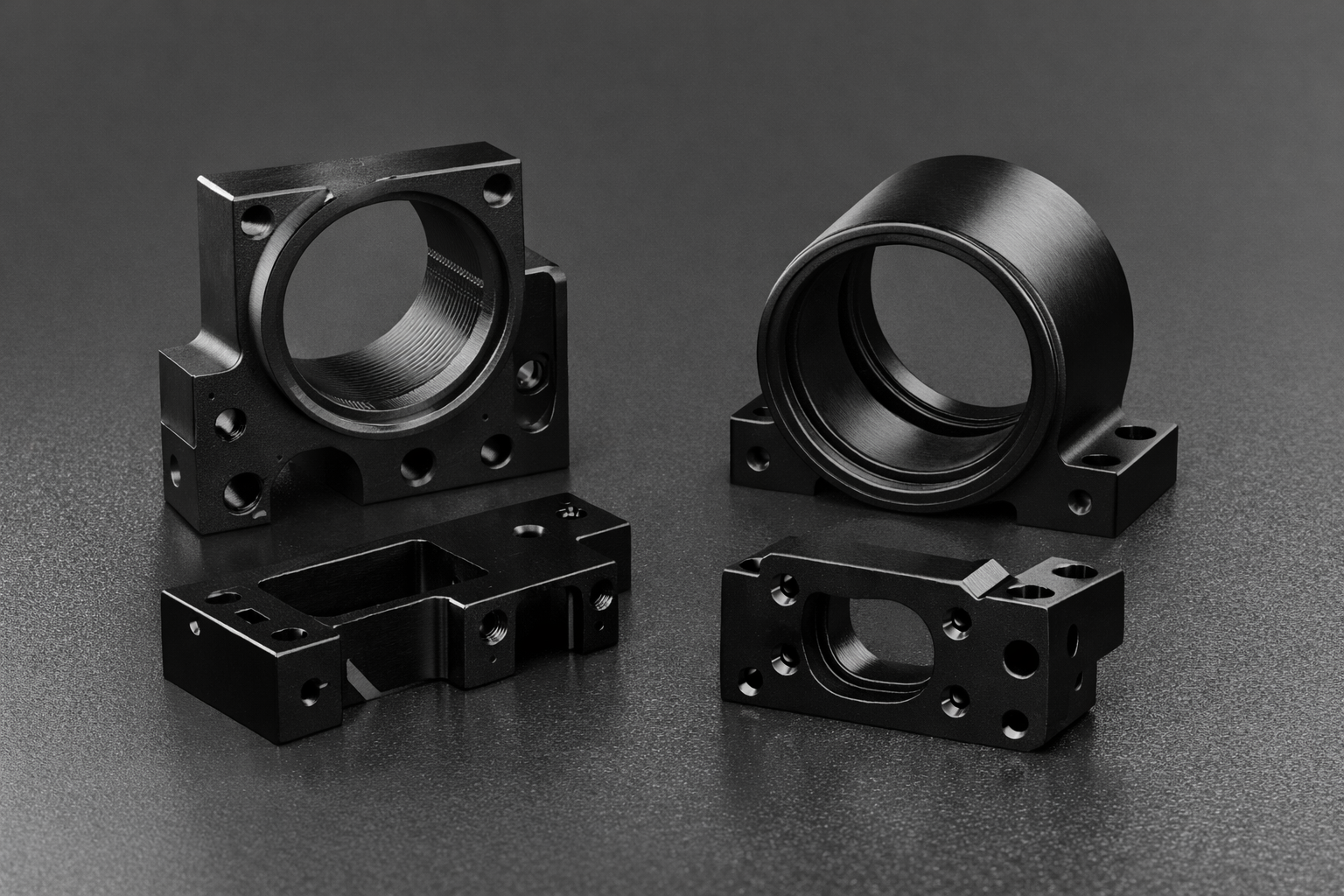
In optical systems, precision is not a marketing term. It is a measurable requirement.
A lens barrel that is off by 0.02 mm can introduce tilt.
A mirror mount with uneven stress can distort the optical path.
A housing with poor concentricity can reduce alignment repeatability during assembly.
That is why custom precision machining is often the most practical solution for optical components. Standard hardware may fit mechanically, but it rarely delivers the stability, geometry control, and repeatability required in optical systems.
We do not machine general-purpose metal parts.
We provide custom precision machining for components that directly affect optical alignment, structural stability, and assembly accuracy.

Why Optical Components Need Custom Precision Machining
Off-the-shelf mounts and housings are usually designed for general mechanical use. In optical applications, that is often not enough.
In real projects, common problems include:
- lens decentering after assembly
- optical axis shift caused by thermal expansion
- mirror deformation due to uneven clamping stress
- poor repeatability between prototype and production builds
With custom precision machining, these issues can be addressed during the design and machining stage instead of being corrected later with shims, manual adjustment, or repeated alignment work.
Typical Precision Requirements for Optical Parts
Optical mechanical parts often require tighter control than ordinary structural components. Our custom precision machining work for optical applications commonly includes:
- Dimensional tolerance: ±0.005 mm
- Coaxiality / perpendicularity: ≤ 0.01 mm
- Surface roughness: Ra ≤ 0.8 µm on machined surfaces
- Thread accuracy: ISO metric and custom optical threads
These are not theoretical numbers. They are based on repeatable machining capability for real production parts.

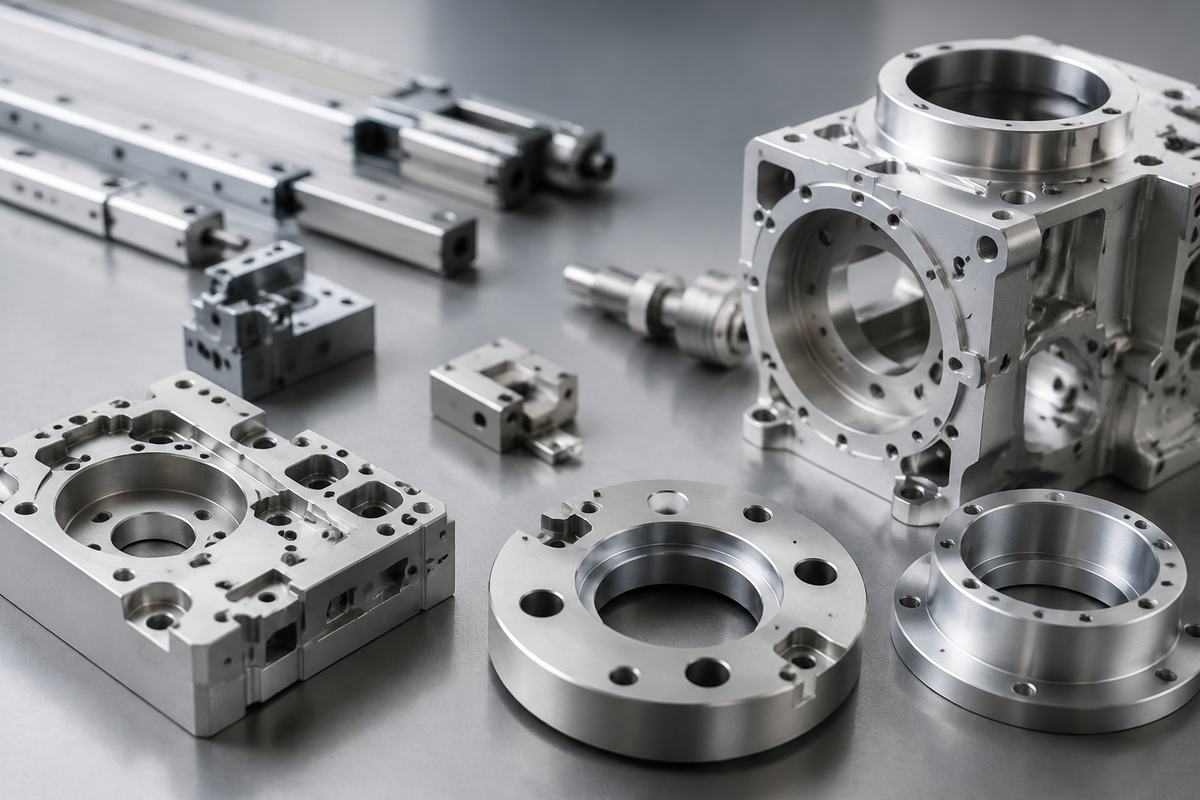
Optical Components Commonly Machined
We regularly support custom precision machining for a wide range of optical mechanical components, including:
- optical lens barrels and lens housings
- mirror holders and mirror mounting frames
- filter frames and retainer rings
- alignment bases and fine adjustment mounts
- optical benches and custom brackets
These parts are often used in imaging systems, laser systems, inspection devices, medical optics, and research equipment.
Materials Used in Optical CNC Machining
Material selection is never based on cost alone. In optical assemblies, thermal behavior, rigidity, weight, and finishing compatibility also matter.
Common materials include:
- Aluminum 6061 / 7075 for lightweight housings and anodized optical parts
- Stainless steel 303 / 304 / 316 for higher rigidity and corrosion resistance
- Brass for vibration damping or thermal stability
- PEEK and engineering plastics for lightweight or electrically insulating structures
In many cases, custom precision machining is not only about hitting the drawing. It is also about choosing a material that behaves predictably during assembly and use.

Optical Mirror Machining Requires Stress Control
Optical mirror machining is one of the clearest examples of why custom precision machining matters.
The goal is not only dimensional accuracy. The goal is stable geometry with minimal stress.
For mirror mounts and reflective component structures, we focus on:
- uniform wall thickness
- symmetrical clamping surfaces
- controlled pocketing for weight reduction
- rigidity without over-constraining the mirror
For complex parts, we often use 5-axis CNC machining to complete the structure in a single setup, which helps reduce accumulated positional error.

Example: Custom Black Anodized Lens Barrel
A typical project involved a custom precision machined lens barrel for an industrial imaging system.
Application: Industrial imaging
Quantity: Prototype + small batch (30 pcs)
Key requirements:
- inner bore concentricity ≤ 0.01 mm
- black anodized interior to reduce stray light
- custom thread matched to an existing lens design
Our machining approach:
- single-setup CNC turning and milling
- internal features machined before anodizing to control coating effect
- critical dimensions checked by CMM before surface treatment
Result:
The parts were assembled without shimming, and optical alignment passed on the first build.
This is what good custom precision machining should achieve in optical applications: parts that fit, align, and repeat without rework.
DFM Support for Optical Parts
Many optical drawings are functionally correct but difficult to machine consistently.
Our DFM support for custom precision machining helps improve manufacturability by:
- adjusting fillet radii to reduce tool marks
- optimizing wall thickness for anodizing consistency
- improving thread lead-in for easier assembly
- reducing unnecessary machining steps without affecting optical function
Often, only small design changes are needed. The goal is not to redesign the part, but to make it easier to produce accurately and repeatedly.
Applications We Commonly Support
Our custom precision machining services for optical parts are commonly used by:
- optical equipment manufacturers
- university and institutional research labs
- medical imaging system developers
- machine vision and custom camera companies
- aerospace and industrial optical system suppliers
From one-off prototypes to low-volume production, the machining process must remain stable and repeatable.
Let’s Review Your Optical Part
If you have:
- a drawing that needs a feasibility review
- a prototype that must move into production
- a part with tight tolerances and limited room for trial-and-error
send us your files.
We review optical components from both a machining and structural stability perspective, and we explain clearly what is achievable, what should be adjusted, and why.
Precision is not a slogan.
With custom precision machining, it becomes something you can measure.

Share:
Materials We Provide