


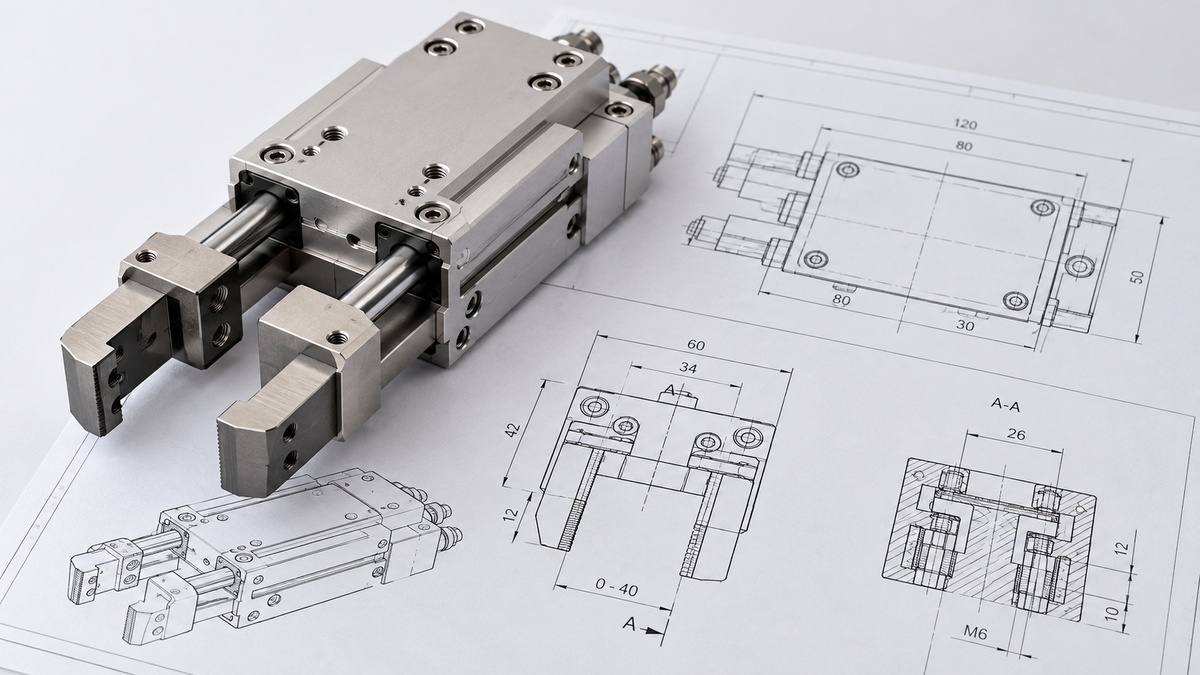
Manufacturing metal parts is a critical part of modern industrial production. From automotive components and industrial machinery to medical devices and electronic equipment, OEM manufacturers rely on precision-engineered metal parts to ensure product performance, durability, and reliability.
Choosing the right manufacturing partner is equally important. A qualified metal parts manufacturer should offer more than machining capabilities. Material selection, manufacturing process optimization, dimensional accuracy, surface finishing, and quality control all contribute to the success of a project.
At XY-GLOBAL, we provide custom metal parts manufacturing solutions for OEM customers, supporting projects from initial prototyping and engineering evaluation to production and final assembly.
1. What Is Custom Metal Parts Manufacturing?
Custom metal parts manufacturing refers to producing metal components according to specific customer drawings, 3D models, technical specifications, and application requirements.
Unlike standard off-the-shelf components, custom metal parts are designed to meet particular functional, structural, and dimensional requirements.
Common applications include:
-
Automotive and transportation components
-
Industrial automation equipment
-
Robotics and AGV systems
-
Medical equipment and devices
-
Electronic enclosures and structural components
-
Energy storage and thermal management systems
-
Precision mechanical assemblies
Depending on the part geometry, material, production volume, and performance requirements, different manufacturing processes may be selected.

2. Common Metal Parts Manufacturing Processes
Selecting the appropriate manufacturing process is one of the most important decisions in metal parts production. Each process has different advantages in terms of dimensional accuracy, production efficiency, material utilization, and overall cost.
CNC Machining
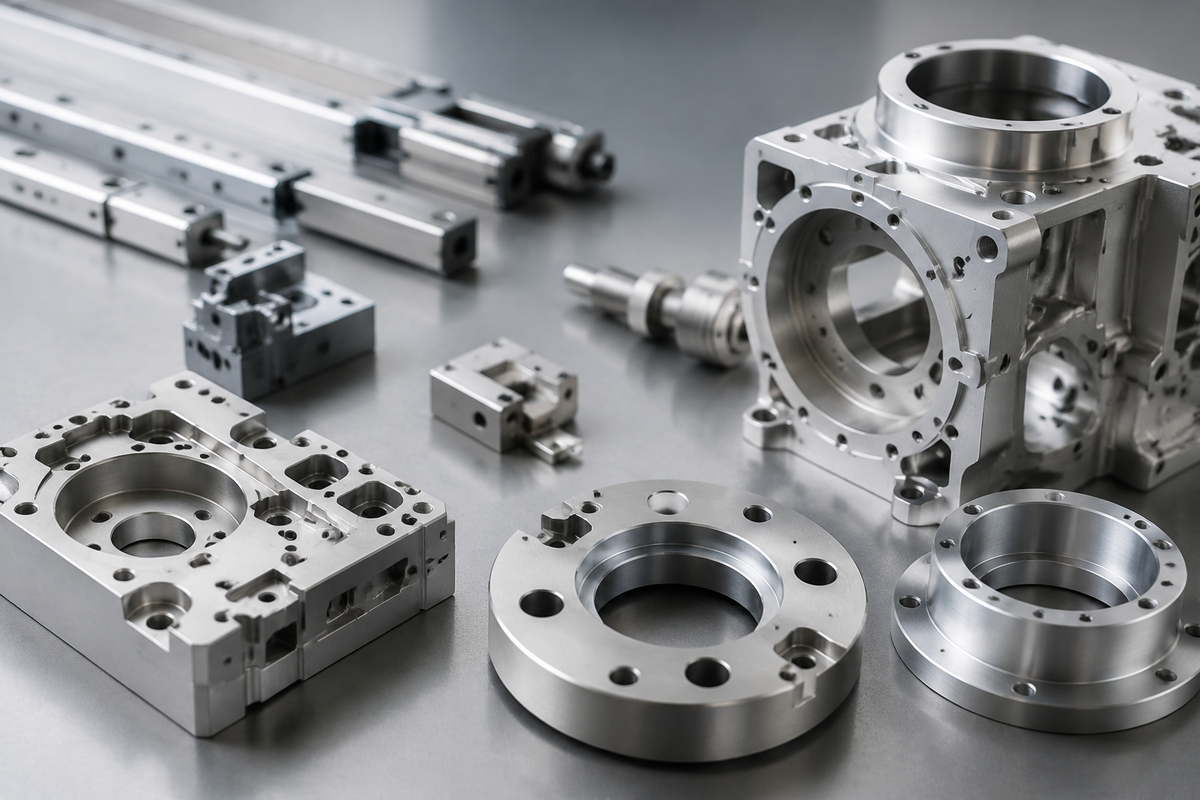
CNC machining is widely used for manufacturing high-precision metal components.
Using computer-controlled cutting tools, CNC machines remove material from metal workpieces to achieve the required geometry and dimensional tolerances.
Common CNC machining capabilities include:
-
3-axis, 4-axis, and 5-axis CNC milling
-
CNC turning
-
Precision grinding
-
EDM machining
-
Drilling, tapping, and threading
Typical materials include aluminum, stainless steel, carbon steel, brass, copper, and engineering alloys.
CNC machining is particularly suitable for prototypes, complex components, low-volume production, and precision parts requiring tight dimensional control.
Metal Die Casting
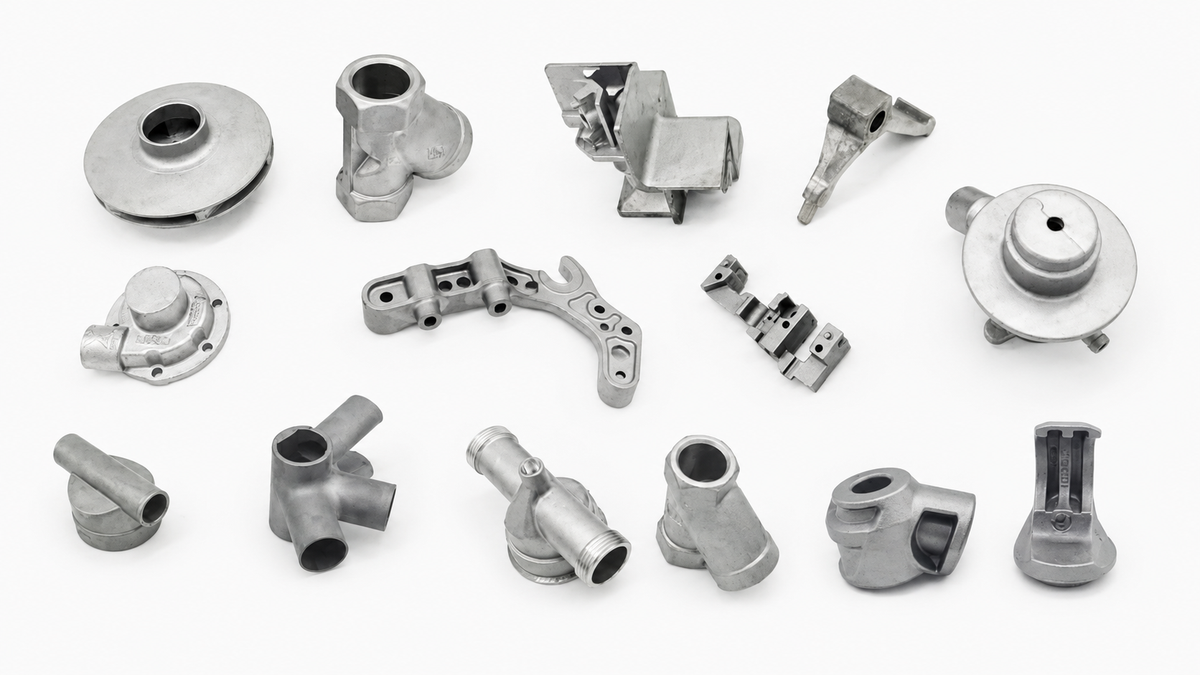
Die casting is an efficient manufacturing process for producing complex metal components in medium- to high-volume production.
Molten metal is injected into a precision-engineered mold under pressure, forming components with consistent geometry and relatively good dimensional repeatability.
Common die casting materials include:
-
Aluminum alloys
-
Zinc alloys
-
Magnesium alloys
Die casting is widely used for automotive housings, electronic enclosures, industrial equipment components, and structural parts.
For projects requiring additional dimensional accuracy or functional features, die-cast components can undergo secondary CNC machining.
Metal Injection Molding (MIM)
Metal Injection Molding (MIM) combines powder metallurgy with plastic injection molding technology.
Fine metal powders are mixed with a binder system and injected into a mold. After debinding and sintering, the material forms a dense metal component.
MIM is particularly suitable for:
-
Small and complex metal components
-
Parts with intricate geometries
-
High-volume production
-
Components requiring repeatable dimensions
Common materials include stainless steel, low-alloy steel, and other specialized metal powders.
Compared with conventional machining, MIM can reduce material waste and manufacturing steps for suitable component designs.

Sheet Metal Fabrication and Welding
Sheet metal fabrication is commonly used to manufacture structural components, brackets, housings, and enclosures.
Typical processes include:
-
Laser cutting
-
Bending and forming
-
Stamping
-
Friction Stir Welding (FSW)
-
Laser welding
-
CNC machining
The combination of sheet metal fabrication, welding, and CNC machining can produce large structural assemblies with functional interfaces and controlled dimensional accuracy.
3. How to Choose the Right Manufacturing Process
Not every metal part should be manufactured using the same process. The optimal solution depends on several factors.
| Selection Factor | Key Considerations |
|---|---|
| Part geometry | Complexity, wall thickness, holes, cavities, and structural features |
| Material | Aluminum, stainless steel, steel, copper, or other alloys |
| Production volume | Prototype, low-volume, or mass production |
| Dimensional accuracy | Critical tolerances and geometric requirements |
| Surface requirements | Anodizing, powder coating, plating, or other finishes |
| Production cost | Tooling investment, machining time, and material utilization |
For example, CNC machining may be more economical for a small prototype batch, while die casting or MIM may provide better unit economics for suitable high-volume applications.
A manufacturing partner with multiple process capabilities can also evaluate alternative production methods to optimize cost and performance.
4. Material Selection for Metal Parts Manufacturing
Material selection directly affects mechanical performance, manufacturing feasibility, product weight, corrosion resistance, and cost.
Some commonly used materials include:
Aluminum Alloys
Aluminum is widely used because of its lightweight properties, corrosion resistance, and machinability. Common applications include structural components, equipment housings, heat sinks, and electronic enclosures.
Stainless Steel
Stainless steel provides good corrosion resistance and mechanical strength. It is commonly used in medical equipment, industrial machinery, and components exposed to demanding environments.
Carbon and Alloy Steel
Steel materials are suitable for structural and mechanical components requiring strength, wear resistance, or specific heat-treatment properties.
Copper and Brass
Copper and brass are frequently selected for electrical components, connectors, thermal management parts, and precision fittings.
The final material should be selected according to the operating environment, mechanical requirements, applicable standards, and manufacturing process.
5. Surface Finishing and Secondary Operations
Surface finishing is an important stage in custom metal parts manufacturing.
Depending on the application, metal components may require additional treatments to improve corrosion resistance, appearance, wear resistance, or functional performance.
Common surface finishing options include:
-
Anodizing for aluminum components
-
Powder coating for protective and decorative finishes
-
Electrophoretic coating (e-coating)
-
Wet painting
-
Plating
-
Laser marking and engraving
-
Deburring and polishing
Secondary operations may also include heat treatment, precision grinding, tapping, and mechanical assembly.
Selecting the correct surface treatment at the design stage helps avoid unnecessary manufacturing costs and potential quality issues.

6. Quality Control in Precision Metal Parts Manufacturing
Quality control is essential for ensuring that manufactured components meet engineering specifications and customer requirements.
A reliable manufacturing process should include inspection at different production stages.
Typical quality control procedures include:
Incoming Material Inspection
Verify material specifications, certificates, and traceability before production.
In-Process Inspection
Monitor critical dimensions and manufacturing parameters during machining, casting, forming, and welding operations.
Coordinate Measuring Machine (CMM) Inspection
CMM equipment is used to measure complex geometries, positional tolerances, and critical dimensions according to engineering drawings.
First Article Inspection (FAI)
FAI verifies that the initial production parts meet the approved technical specifications before proceeding with larger production quantities.
Final Inspection
Finished components are inspected for dimensional accuracy, surface quality, functional requirements, and packaging conditions.
For customers in regulated industries, quality documentation and traceability are also important considerations.
XY-GLOBAL operates under ISO 9001 and ISO 13485 quality management systems, supporting customers with inspection reports and quality documentation according to project requirements.
7. What to Consider When Selecting a Metal Parts Manufacturer
Choosing the right supplier can significantly affect product quality, production lead time, and total project cost.
Before selecting a manufacturing partner, OEM buyers should evaluate the following:
-
Manufacturing capabilities: Can the supplier support the required processes, materials, and component geometries?
-
Engineering support: Can the engineering team review drawings, identify manufacturing risks, and suggest design improvements?
-
Quality management: Are inspection procedures, measurement equipment, and quality documentation available?
-
Production flexibility: Can the supplier support prototype development, small batches, and subsequent mass production?
-
Supply chain coordination: Can multiple manufacturing processes and secondary operations be coordinated efficiently?
-
Communication: Can the supplier provide clear technical feedback and production updates throughout the project?
A capable manufacturing partner should help customers evaluate not only the quoted unit price but also tooling investment, production efficiency, inspection requirements, and long-term supply stability.

8. Custom Metal Parts Manufacturing Solutions from XY-GLOBAL
XY-GLOBAL provides integrated manufacturing solutions for industrial OEM customers seeking reliable custom metal components.
Our manufacturing capabilities cover multiple processes:
-
CNC Machining: 3-axis, 4-axis, and 5-axis milling, turning, grinding, and EDM.
-
Die Casting: Aluminum, zinc, and magnesium alloy components.
-
Metal Injection Molding: MIM and ceramic injection molding (CIM).
-
Sheet Metal Fabrication: Cutting, bending, forming, and precision fabrication.
-
Welding: Friction Stir Welding (FSW) and laser welding.
-
Surface Finishing: Anodizing, powder coating, electrophoretic coating, painting, and laser marking.
-
Assembly: Mechanical assembly and integrated component solutions.
We support customers throughout the manufacturing process, from drawing evaluation and Design for Manufacturing (DFM) to prototyping, production, inspection, and delivery.
Whether you need a small batch of precision-machined components or a long-term manufacturing partner for OEM production, our team can help evaluate the most suitable manufacturing approach.
9. Request a Quote for Custom Metal Parts
Looking for a reliable partner for manufacturing metal parts?
Send us your 2D drawings, 3D CAD files, material specifications, and estimated annual quantities. Our engineering and sales teams will review your requirements and recommend suitable manufacturing processes.

Share:
Precision CNC Machining for Robotics: From Complex Parts to Practical DFM Tips