


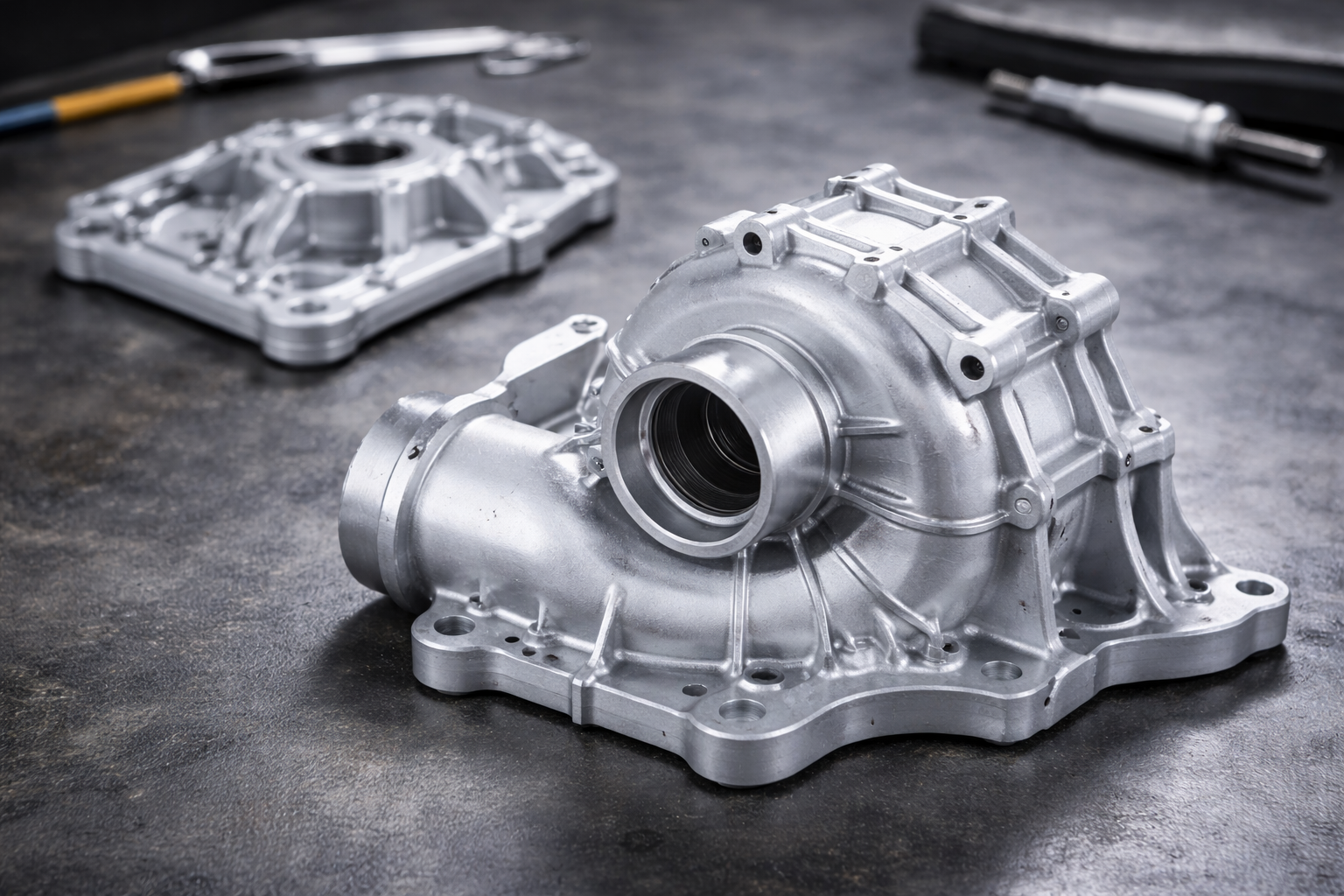
In aluminum die casting, mold temperature is one of those parameters everyone talks about, but many factories still control it by experience rather than data.
If the aluminum die casting mold temperature is unstable, problems appear quickly — cold shuts, sticking, porosity, longer cycle time, or even early mold cracking.
From real production experience, the goal is not simply “high temperature” or “low temperature,” but stable and uniform heat balance across the mold.

Why Mold Temperature Matters More Than Most People Think
Molten aluminum loses heat extremely fast when it enters the cavity.
If the mold surface is too cold, aluminum freezes before filling thin areas.
If the mold is too hot, demolding becomes difficult and cycle time increases.
In practical production, mold temperature affects:
-
Metal flow behavior
-
Solidification speed
-
Surface quality
-
Mold fatigue life
Most casting defects we see are not caused by machine pressure — they are caused by thermal imbalance.
Typical Aluminum Die Casting Mold Temperature Range (Reference Table)
Below is a practical temperature guideline based on common aluminum die casting scenarios.
These values are not fixed rules, but they are good starting points during process setup.
| Application Type | Recommended Mold Temperature | Why This Range Works |
|---|---|---|
| Thin-wall housings | 220–280 °C | Helps aluminum flow before freezing |
| Structural brackets | 200–240 °C | Balanced strength and cycle time |
| Thick parts | 180–220 °C | Prevents overheating and sticking |
| Cosmetic surface parts | 240–280 °C | Improves surface finish consistency |
👉 In real production, consistency matters more than chasing the highest temperature.

Common Problems When Aluminum Die Casting Mold Temperature Is Wrong
Instead of listing theory, here are issues we often see on the shop floor:
| Mold Temperature Issue | What Happens in Production | Typical Result |
|---|---|---|
| Too low | Aluminum freezes early | Cold lines, short shots |
| Too high | Aluminum sticks to cavity | Surface defects, slower cycle |
| Uneven heating | One side fills faster | Warpage, internal stress |
| Fluctuating temperature | Process instability | High scrap rate |
Many operators try to compensate with injection speed or pressure, but the root cause is usually temperature imbalance.
Traditional Heating Methods vs Oil-Based Mold Heating
Some factories still use gas torches or cartridge heaters for mold preheating.
They work for small setups, but for stable aluminum die casting production, they often cause hot spots.
A more reliable approach is circulating heat transfer oil.
Why oil heating works better in real production:
-
Heat spreads evenly through channels
-
Temperature stays stable during long runs
-
Less thermal shock to the mold steel
-
Easier to maintain consistent mold temperature
Oil systems can typically operate up to around 350 °C, which covers most aluminum alloy die casting requirements.

How to Set Aluminum Die Casting Mold Temperature in Practice
Instead of guessing, many engineers follow a simple workflow:
1️⃣ Start at a moderate temperature (around 220 °C).
2️⃣ Observe filling behavior and surface quality.
3️⃣ Adjust temperature gradually rather than changing injection pressure first.
4️⃣ Monitor thermal balance between fixed and moving halves.
In many cases, improving mold temperature stability reduces defects more effectively than changing machine parameters.
Real Production Tips From Experience
These small details often make a big difference:
-
Keep temperature sensors close to the cavity, not only near the heater.
-
Avoid sudden temperature jumps during shift changes.
-
Check cooling channels — blockage creates hidden hot spots.
-
Maintain steady oil flow rate, not just target temperature.
Stable thermal conditions usually lead to smoother production and longer mold life.
Conclusion
Controlling aluminum die casting mold temperature is less about chasing a specific number and more about maintaining stable thermal conditions.
When heating is uniform and consistent, aluminum fills better, defects decrease, and cycle time becomes predictable.
For many aluminum die casting applications, upgrading from manual heating to controlled oil-based systems is one of the most effective ways to improve long-term production stability.
FAQ: Aluminum Die Casting Mold Temperature
What is the ideal aluminum die casting mold temperature?
There is no single fixed value that works for every project.
In most aluminum die casting applications, mold temperature is typically controlled between 180 °C and 280 °C, depending on wall thickness, alloy type, and surface requirements.
Thin-wall parts usually require higher mold temperatures to improve filling, while thicker structural parts can run at lower ranges to maintain cycle efficiency.
What happens if aluminum die casting mold temperature is too low?
When the mold temperature is too low, molten aluminum loses heat too quickly after entering the cavity.
Common problems include:
-
Cold shuts or flow lines
-
Incomplete filling
-
Poor surface quality
Many operators try to increase injection speed to compensate, but in practice, stabilizing mold temperature often solves the issue more effectively.
Can mold temperature be too high in aluminum die casting?
Yes. Excessive mold temperature may lead to aluminum sticking to the cavity surface, longer cooling times, and increased cycle duration.
High temperatures can also accelerate die wear and increase the risk of soldering defects.
The goal is not maximum temperature, but stable thermal balance during production.
Why do many aluminum die casting factories use oil-based mold heating systems?
Oil-based heating systems are widely used because they provide more uniform heat distribution compared to gas torches or cartridge heaters.
Key advantages include:
-
Stable long-term temperature control
-
Reduced thermal shock to the mold
-
More consistent aluminum flow behavior
Heat transfer oil systems can typically operate up to around 350 °C, covering most aluminum die casting mold temperature requirements.
How do engineers adjust aluminum die casting mold temperature during production?
Instead of making large adjustments, experienced engineers usually fine-tune temperature in small steps while monitoring filling behavior and surface quality.
Typical workflow includes:
-
Start with a mid-range temperature
-
Observe casting defects
-
Adjust heating zones gradually
-
Maintain consistent oil flow and sensor accuracy
Stable mold temperature often reduces scrap rates more effectively than changing machine pressure settings.
Does mold temperature affect die life in aluminum die casting?
Yes. Frequent temperature fluctuations create thermal stress inside the mold steel, which can lead to cracking over time.
Maintaining a consistent aluminum die casting mold temperature helps reduce thermal fatigue and extend mold lifespan.


Share:
Can an Old Machine be Retrofitted with a Zero Point System, and What Should You Check First?
Self Centering Vise: The Complete Guide to Precision CNC Workholding